

NICHE project

NICHE is a 24-months project at the School of Archaeology, University of Oxford, funded by the European Commission as part of the Marie Skłodowska-Curie action 2018.
This project combines analyses on the taxonomic composition, isotopic signature, economic exploitability and functional ecology of wild cereal habitats in the Near East. Our major goal is to create a data basis that allows to more reliably trace the origins of arable weeds and the development of subsistence strategies throughout the Neolithic transition.
The four pillars of the project have the following goals:
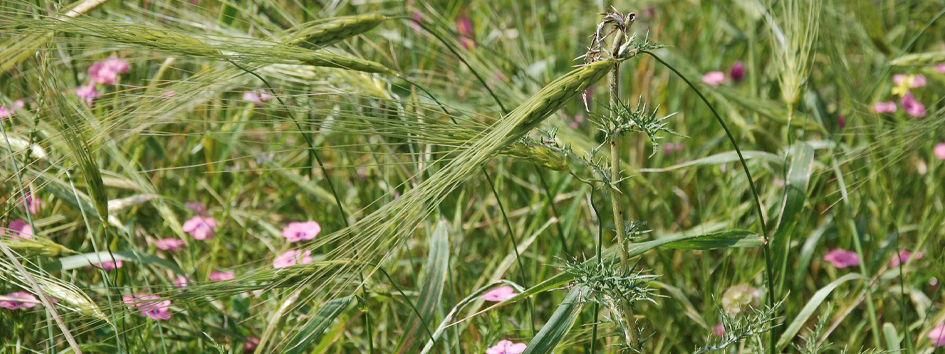
Vegetation surveys
We investigate the taxonomic composition of unmanaged wild cereal habitats by surveying Mediterranean grasslands in the southern Levant. The landscapes between Mt. Carmel and the Sea of Galilee still harbour extensive wild cereal populations and are close to important Epi-palaeolithic and early Neolithic sites such as Ohalo II (Nadel 1990), Jericho (Kenyon 1957) or Netiv Hagdud (Bar-Yosef and Gopher 1997). We con-centrate on stands of the wild progenitors Triticum turgidum subsp. dicoccoides and Hordeum vulgare subsp. spontaneum, but also include habitats dominated by Aegilops spp. and Avena sterilis. Associations of potential arable weeds with unmanaged wild cereal stands represent a major focus of the surveys, as archaeobotanists interpret these taxa as evidence for the cultivation of morphologically wild cereals (e.g. Fuller and Stevens 2018). For evaluating the ecological effects of traditional cultivation practices, we also survey local arable fields and compare their floristic composition to that of unmanaged habitats.
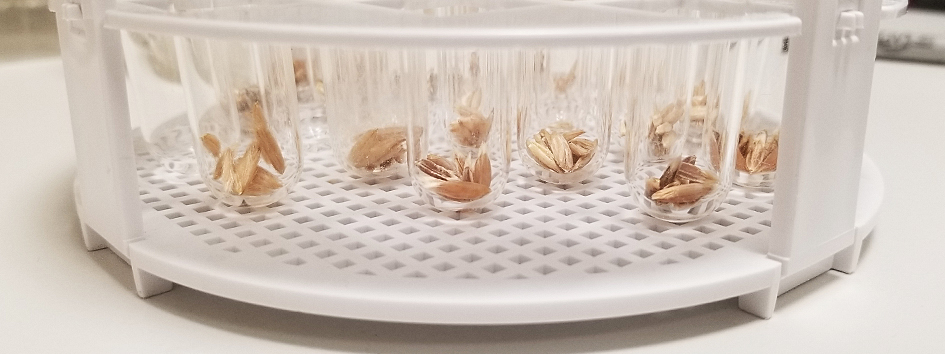
Stable isotope analyses
In Early Neolithic archaeobotanical assemblages, wild cereal grains are regularly associated with grains from other wild grass taxa, raising the question whether small to medium sized grains have been deliberately harvested or if they represent by-products of intensive wild cereal exploitation strategies. For addressing this problem, we analyse the stable carbon and nitrogen isotope ratios of several grass taxa along environmental gradients and from different sites. The analyses aim at testing whether stable isotope values differentiate between grains harvested from different stands, potentially allowing to decide which taxa were individually - and thus deliberately - harvested.
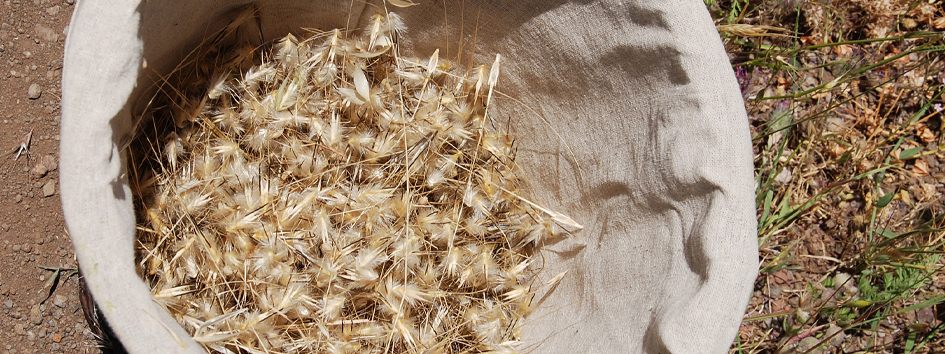
Harvesting experiments
We experimentally harvest medium to large-seeded wild grasses from unmanaged stands to test whether (1) harvesting efficiency between the wild progenitor species and other taxa is significantly different and (2) whether fruits/seeds of potential arable weeds become incorporated into wild grain harvests. With these experiments we aim at contributing to the discussion on resource choice of Early Neolithic communities and test, for the first time, if gathering wild cereals can produce a “cultivation signature” based on the unintentional harvesting of facultative arable weeds associated with wild cereal stands. Harvesting techniques are based on ethnographically and archaeologically docu-mented methods including sickle-reaping, beating grains into a basket, swinging a basket through ripe fruit heads, hand-plucking and ground-collecting (e.g. Harlan 1989; Hillman and Davies 1990; Kislev et al. 2004).
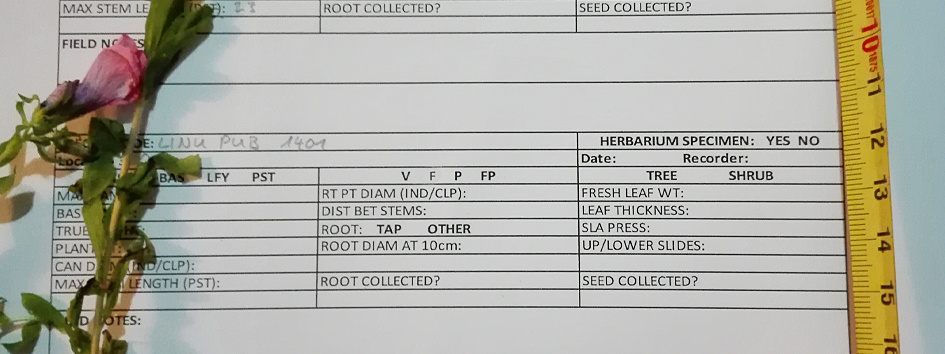
Functional plant ecology
We measure plant functional attributes of the recorded species in order to translate the taxonomic composition of a habitat into proxy measures for ecological gradients including habitat productivity, water availability, seasonality and disturbance (Charles et al. 1997; Bogaard 2004). The composition of functional traits among the surveyed habitats will help to understand ecological differences between the wild cereal stands and provides the opportunity to compare the functional ecology of unmanaged habitats to traditional farming systems.
Background of the project
In recent decades, archaeobotanical research on the origins of agriculture has strongly focused on the wild progenitors of the founder crops (Zohary et al. 2012), the experimental cultivation of predominantly wild cereals (Hillman and Davies 1990; Willcox 1999), and on identifying potential arable weeds in archaeobotanical assemblages for tracing the beginnings of cultivation (Willcox 2012). Based on these investigations scholars developed the “pre-domestication cultivation hypothesis”, arguing that wild cereals and pulses were cultivated for more than 1,500 years before morphological domestication traits appeared (e.g. Colledge 2002; Fuller et al. 2011). Pre-domestication cultivation now represents the major explanatory framework for understanding Early Holocene subsistence developments, with the identification of potential weed floras associated with remains of wild cereals as its key identification criterion. However, little is known about the origins of arable weeds and their association with unmanaged wild cereal habitats, casting doubt on their reliability as indicators of early cultivation activities. In addition, scholars have emphasised that Early Neolithic archaeobotanical assemblages could represent wild cereal exploitation strategies that did not involve cultivation (Rosen and Rivera-Collazo 2012; Asouti 2017), but nevertheless resulted in the incorporation of unwanted seeds (=“weeds”) in the grain harvests from unmanaged stands structurally resembling cultivated fields (Anderson 1999). We must therefore be cautious in using modern facultative weed taxa for identifying prehistoric cultivation activities and need to develop a more holistic approach to trace the origins of “weed seeds” associated with wild cereal grains in Early Neolithic archaeobotanical assemblages. A related problem concerns medium- and large-seeded wild grasses (e.g. goat grasses, oats, medusahead, etc.) that grow together with the wild progenitors in modern stands and occur abundantly at numerous Early Neolithic sites (e.g. Savard et al. 2006; Whitlam et al. 2018). Although it is not fully clear whether these edible grasses were harvested individually or represent by-products (=”weeds”) of wild cereal exploitation strategies, they seem to have played a crucial role in Early Neolithic subsistence economies and culinary practices throughout the Near East (Weide et al. 2018). Reconstructing subsistence developments during the Neolithic transition must therefore consider these medium- and large-seeded wild grasses more thoroughly and we need to develop new approaches for understanding the role of edible grass resources in comparison to the wild cereals in prehistoric contexts. Moreover, harvesting “non-cereal” grasses from dense but unmanaged stands could represent an additional route of entry for “weed seeds” into archaeobotanical assemblages, reflecting the ecology of foraging habitats rather than cultivation activities.
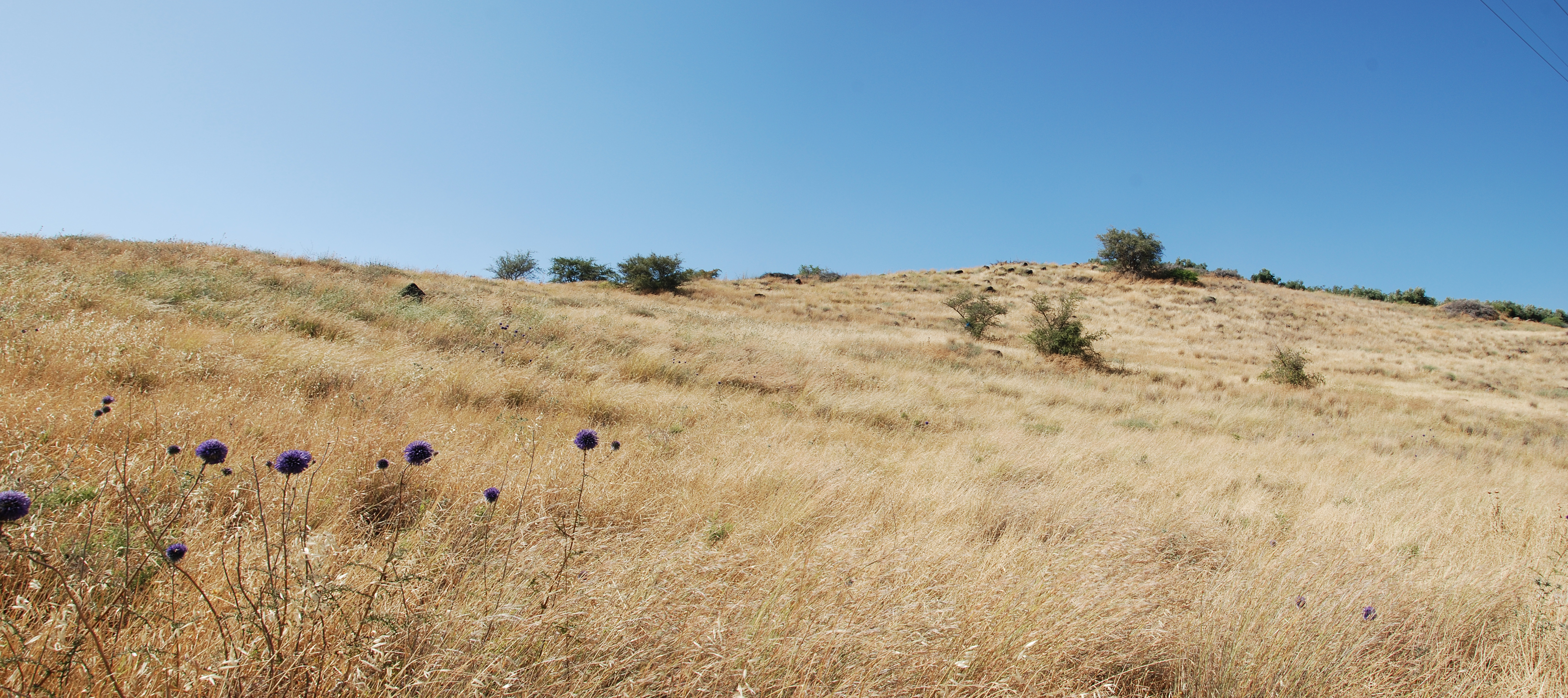
Wild barley, emmer and oat grow intermixed near the village of Tabgha at the northern shore of the Sea of Galilee. These dense stands are structurally similar to cultivated cereal fields. (Photo: A. Weide, early May 2017)

Producing replicas of late Epipalaeolithic/early Neolithic flint sickles
As a first step in planning and preparing the harvesting experiments, we are producing replicas of late Epipalaeolithic/early Neolithic flint sickles, oriented on finds from el-Wad (Israel) and Jericho (Palestine).
We started with an exciting knapping workshop at John Lord's place in Gooderstone, Norfolk (https://www.flintknapping.co.uk/index.html), who showed us how to prepare a flint core in order to produce long and straight sickle blanks. Well, let’s be honest and confess that he was actually the one who was able to produce them! The results are astonishing and together with Will Mills (Oxford) we are retouching the blanks and prepare wooden handles for the sickle replicas.
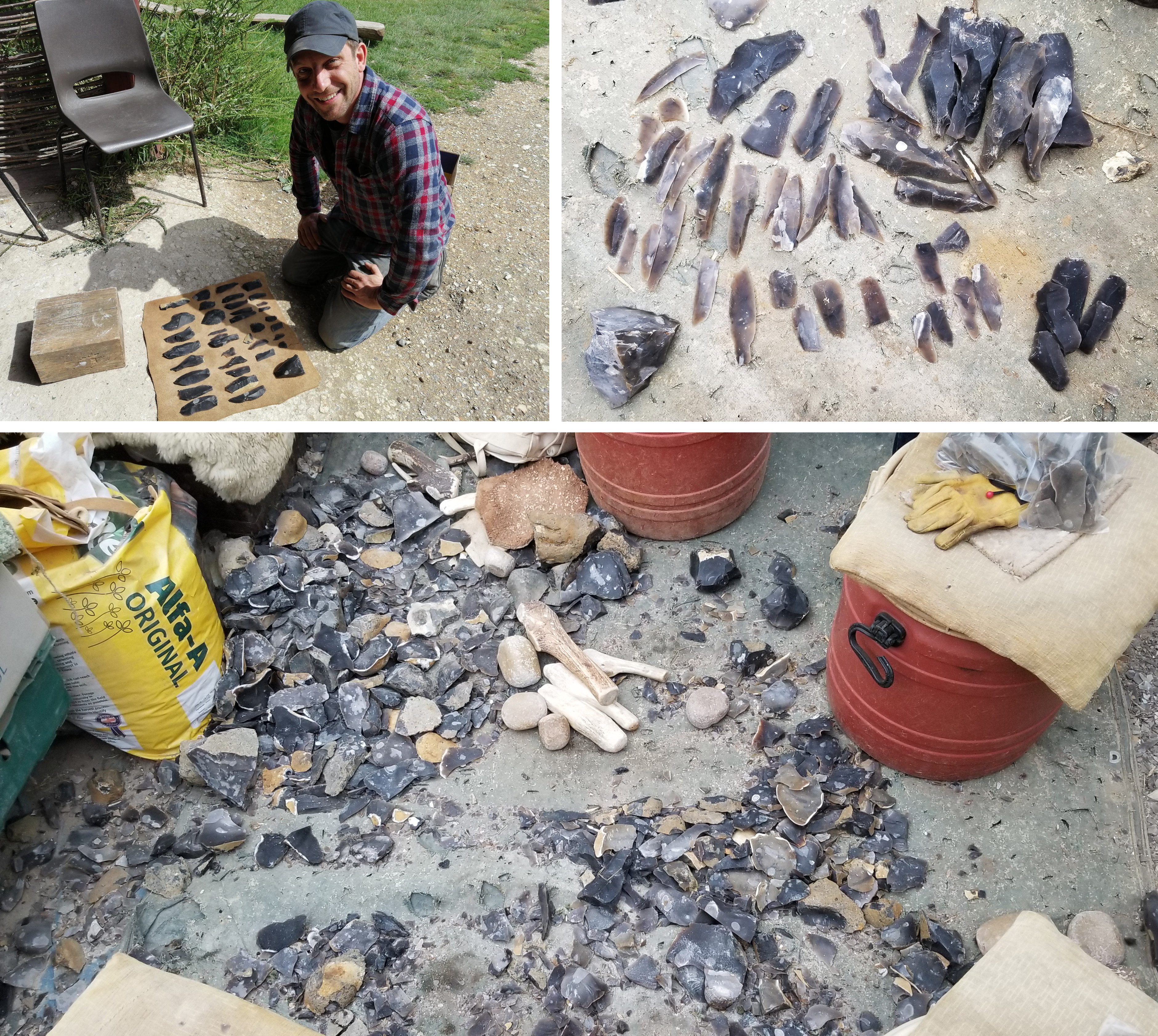
Upper left: Will Mills with some of his excellent knapping results; upper right: a collection of shaping flakes (top), blades (middle) and the core (bottom left) produced by John Lord; below: the refuse of a very productive one-day knapping workshop.

Principal investigator (Marie Skłodowska-Curie IF grant holder)
Alexander Weide (University of Oxford)
E-mail: alexander.weide@arch.ox.ac.uk
ORCID: https://orcid.org/0000-0002-0358-9995
Fellowship Supervisor
Amy Bogaard (University of Oxford)
Associated scientists and collaborators in the UK
John G. Hodgson (University of Sheffield)
Jade Whitlam (University of Oxford)
International collaborators
Hagar Leschner, Neta Manela & Tamar Avin-Wittenberg (Hebrew University of Jerusalem)
Guy Dovrat (Agricultural Research Organization, Ramat Yishay)
Yoel Melamed (Bar-Ilan University of Ramat Gan)
Liat Hadar (Ramat Hanadiv Nature Park)

Here you find all publications of the NICHE project and papers that are associated with related activities. By clicking on the links, you will be directed to the online publications on the journal websites. In case you do not have access to the publications, please contact Alexander Weide (see "Team" menu).

This paper in Nature Plants presents the functional ecological model we developed in context of the NICHE project. The model focuses on mechanical soil disturbance factors - mainly soil tillage - and shows that tillage as an agricultural practice developed much later than previously assumed.
https://doi.org/10.1038/s41477-022-01161-7

This paper in Environmental Archaeology presents the results of vegetation surveys we conducted in spring 2019. We compare the floristic composition of wild cereal habitats with that of local arable weed floras and find a large overlap in species. This indicates that many typical arable weeds of traditional Levantine agriculture originated in local grasslands and cannot be used not identify the earliest cultivation activities.
https://doi.org/10.1080/14614103.2021.1882715

This paper in agronomy proposes a theoretical model for understanding the pace and trajectories of early cereal domestication in southwest Asia. The model considers biological, social, and economic factors that are associated with early cereal management systems and selection for domestication traits such as non-shattering ears.
https://doi.org/10.3390/agronomy11122432 (open access)

This paper in Vegetation History and Archaeobotany identifies a mysterious grain type as a modern grass species. The so-called "Triticoid type grains" confused archaeobotanists for decades, leading to ambiguity among wheat and rye grain identifications in prehistoric contexts. It has even be suggested that these grains represent an extinct wild cereal species, but here we show that they belong to the extant species Heteranthelium piliferum.

Funding
Funding for this project is provided by the European Commission as part of the Marie Skłodowska-Curie action 2018. The harvesting experiments and associated activities are funded by the John Fell Oxford University Press Research Fund.

References
Anderson, P.C., 1999. History of harvesting and threshing techniques for cereals in the prehistoric Near East, in: Damania, A., Valkoun, J., Willcox, G., Qualset, C. (Eds.), The Origins of Agriculture and Crop Domestication. ICARDA, Aleppo, 141-155.
Asouti, E., 2017. Human Palaeoecology in Southwest Asia During the Early Pre-Pottery Neolithic (c. 9700-8500 cal BC): the Plant Story, in: Benz, M., Gebel, H.G.K., Watkins, T. (Eds.), Neolithic Corporate Identities. Ex oriente, Berlin, 21-53.
Bar-Yosef, O., Gopher, A., 1997. An Early Neolithic Village in the Jordan Valley. Part I: The Archaeology of Netiv Hagdud. Peabody Museum, Cambridge.
Bogaard, A., 2004. Neolithic Farming in Central Europe. Routledge, London.
Charles, M., Jones, G., Hodgson, J.G., 1997. FIBS in Archaeobotany: Functional Interpretation of Weed Floras in Relation to Husbandry Practices, Journal of Archaeological Science 24, 1151-1161.
Colledge, S., 2002. Identifying pre-domestication cultivation in the archaeobotanical record using multivariate analysis: presenting the case for quantification, in: Cappers, R., Bottema, S. (Eds.), The dawn of farming in the Near East. Ex oriente, Berlin, 141-151.
Fuller, D.Q., Stevens, C.J., 2018. The Making of the Botanical Battleground: Domestication and the Origins of the World’s Weed Floras, in: Lightfoot, E., Liu, X., Fuller, D.Q. (Eds.), Far from the Hearth - Essays in Honour of Martin K. Jones. McDonald Institute for Archaeological Research, Cambridge, 9-21.
Fuller, D.Q., Willcox, G., Allaby, R.G., 2011. Cultivation and domestication had multiple origins: arguments against the core area hypothesis for the origins of agriculture in the Near East, World Archaeology 43, 628-652.
Harlan, J.R., 1989. Wild-grass seed harvesting in the Sahara and sub-Sahara of Africa, in: Harris, D.R., Hillman, G.C. (Eds.), Foraging and farming. The evolution of plant exploitation. Unwin Hyman, London, 79-98.
Hillman, G.C., Davies, M.S., 1990. Measured Domestication Rates in Wild Wheats and Barley Under Primitive Cultivation, and Their Archaeological Implications, Journal of World Prehistory 4, 157-222.
Kenyon, K.M., 1957. Digging up Jericho. Benn, London.
Kislev, M.E., Hartmann, A., Weiss, E., 2004. Impetus for sowing and the beginning of agriculture: Ground collecting of Wild Cereals, Proceedings of the National Academy of Sciences 101, 2692-2695.
Nadel, D., 1990. Ohalo II—A Preliminary Report, Mitekufat Haeven: Journal of the Israel Prehistoric Society 23, 48-59.
Rosen, A.M., Rivera-Collazo, I., 2012. Climate change, adaptive cycles, and the persistence of foraging economies during the late Pleistocene/Holocene transition in the Levant, Proceedings of the National Academy of Sciences 109, 3640-3645.
Savard, M., Nesbitt, M., Jones, M.K., 2006. The role of wild grasses in subsistence and sedentism: new evidence from the northern Fertile Crescent, World Archaeology 38, 179-196.
Weide, A., Riehl, S., Zeidi, M., Conard, N.J., 2018. A systematic review of wild grass exploitation in relation to emerging cereal cultivation throughout the Epipalaeolithic and aceramic Neolithic of the Fertile Crescent, PLOS ONE 13, e0189811.
Whitlam, J., Bogaard, A., Matthews, R., Matthews, W., Mohammadifar, Y., Ilkhani, H., Charles, M., 2018. Pre-agricultural plant management in the uplands of the central Zagros: the archaeobotanical evidence from Sheikh-e Abad, Vegetation History and Archaeobotany 27, 817-831.
Willcox, G., 1999. Archaeobotanical significance of growing Near Eastern Progenitors of Domestic Plants at Jalès, France, in: Anderson, P.C. (Ed.), Prehistory of Agriculture. University of California, Los Angeles, 103-117.
Willcox, G., 2012. Searching for the origins of arable weeds in the Near East, Vegetation History and Archaeobotany 21, 163-167.
Zohary, D., Hopf, M., Weiss, E., 2012. Domestication of Plants in the Old World, 4 ed., Oxford University Press, Oxford.

