The project, funded by the Leverhulme Trust (2022-2025), examines the potential impact of climate change on early modern humans over the last 300,000 years. The region chosen contains some of the earliest Homo sapiens fossils in Africa and lies on the NW edge of the Sahara in areas that experienced extreme environmental variability in this period. The project uses archaeological and environmental records from caves in Morocco and proxy evidence from continuous marine core records to test whether periods of increased environmental variability were linked to known phases of behavioural innovation in Middle Stone Age humans. The detailed reconstruction of past environments will be achieved by a multidisciplinary approach, combining stable isotopic analyses of small mammal teeth in caves, high resolution geochemical and isotopic studies of the marine core, and comparing these sources with archaeological archives. Dated volcanic ash layers from the Canary Islands and the Azores will be employed to tie the different records together, using microscopic ash traces in the cave and marine deposits (tephrochronology). The overall objective is to provide a first, high-precision interlinked record for understanding environmental conditions during the Middle Stone Age and how periods of increased climate instability may have impacted on behavioural developments in human societies.
Professor Nick Barton
Archaeology
Professor Victoria Smith
Tephrochronology and volcanic geology
Dr Amy Styring
Isotopic analyses
Dr Kevin Uno
Marine core geochemistry and biomarkers
Dr Danielle McLean
Postdoctoral Researcher
Dr Emma Horn
Postdoctoral Researcher
Dr Stacy Carolin
Postdoctoral Researcher
Dr Nicholas O'Mara
Postdoctoral Researcher
Dr Emmanuelle Stoetzel
Taphonomy, Palaeoecology
Dr Bryce Mitsunaga
Postdoctoral Researcher
Eloise Wilkinson-Rowe
DPhil student
Dr Kayla Worthy
ASPR Postdoctoral Fellow
Recent CAVES Project Publications
Horn, E.L., McLean, D., Pimentel, A., Pacheco, J.M., Aguiar, S., Manning, C.J., Barton, N., Smith, V.C. and CAVES Project Team (2025). Geochemical characterisation of major silicic explosive eruptions from the Azores in the last~ 100 kyrs. Journal of Volcanology and Geothermal Research, p.108446. https://doi.org/10.1016/j.jvolgeores.2025.108446
Barton, N., Bouzouggar, A., Carolin, S. and Humphrey, L., 2025. A reappraisal of the Middle to Later Stone Age prehistory of Morocco. Journal of the Royal Anthropological Institute. https://doi.org/10.1111/1467-9655.14312
McLean, D., Horn, E. L., Aguiar, S., Barton, N., Brown, R., Carolin, S., Day, C., Kuhlmann, H., Kutterolf, S., Mitsunaga, B., O'Mara, N. A., Pacheco, J. M., Pimentel, A., Ramalho, R. S., Schindlbeck‑Belo, J. C., Stoetzel, E., Styring, A., Uno, K. T., Vidyarthi, V., Xu, Y., & Smith, V. C. (2024). Opportunities to synchronise and date archaeological and climate records in Northwest Africa using volcanic ash (tephra) layers. Libyan Studies, 55, 48‑68. https://doi.org/10.1017/lis.2024.18
Key Publications relating to the CAVES Project
Barton, R.N.E ., Bouzouggar, A., Collcutt, S.N, Humphrey, L.T. (eds.), 2019. Cemeteries and Sedentism in the Later Stone Age of NW Africa: Excavations at Grotte des Pigeons, Taforalt, Morocco . Monographien des Römisch-Germanischen Zentralmuseums 147. Römisch Germanisches Zentralmuseum, Regensburg. 600 pages, 280 figures. ISBN-13: 9783 79543478 OA https://doi.org/10.11588/propylaeum.734
Barton, R.N.E. , Belhouchet, L., Collcutt, S.N. et al., 2021. New insights into the late Middle Stone Age occupation of Oued el Akarit, southern Tunisia. Libyan Studies 1–24. https://doi.org/0.1017/lis.2021.9
Barton, R.N.E ., Collcutt, S.N., Carrión Marco, Y., et al., 2016. Reconsidering the MSA to LSA transition at Taforalt Cave (Morocco) in the light of new multi-proxy dating evidence. Quaternary International 413 (2016), 36-49. https://doi.org/10.1016/j.quaint.2015.11.085
Barton, R.N.E ., Lane, C., Albert, P.G., et al., 2015. The role of cryptotephra in refining the chronology of Late Pleistocene human evolution and cultural change in North Africa. Quaternary Science Reviews. 118, 151-169. https://doi.org/10.1016/j.quascirev.2014.09.008
Barton, R.N.E. , Bouzouggar, A. 2013. Hunter-gatherers of the Maghreb: 25,000-6000 years ago. In Lane, P. and Mitchell, P. (Eds.), The Oxford Handbook of African Archaeology. OUP 431-443.
Barton, R.N.E. , d'Errico, F., 2012. North African origins of symbolically mediated behaviour and the aterian. In: Elias, S. (Ed.), Origins of Human Innovation and Creativity. In: van der Meer, J.J.M. (Ed.), Developments in Quaternary Science, vol. 16. Elsevier B.V., pp. 23–34.
Bouzouggar, A., Humphrey, L., Barton, N., 2020. Cultural transitions in the Middle Stone Age and Later Stone Age records of Northwest Africa. An overview from Morocco. In Leplongeon, A., Goder-Goldberger, M. & Pleurdeau, D. (Eds.). Not just a corridor. Human occupation of the Nile Valley and neighbouring regions between 75,000 and 15,000 years ago. Muséum national d'Histoire naturelle, 2020, Natures en Sociétés, 3, 9782856539316. ⟨10.5852/nes03⟩ . ⟨hal-03035363⟩
Bouzouggar, A., Humphrey, L.T., Barton, N. et al. 2018. 90,000 year-old specialised bone technology in the Aterian Middle Stone Age of North Africa. PLOS One, October 3, 2018. https://doi.org/10.1371/journal.pone.0202021
Bouzouggar, A., & Barton, R.N.E. 2012. The Identity and Timing of the Aterian in Morocco. In Modern Origins: A North African Perspective, eds. J.J. Hublin and S.P. Mcpherron. Dordrecht: Springer, 35–47.
Bouzouggar, A., N. Barton, M. Vanhaeren, F.et al., 2007. 82,000 year-old shell beads from North Africa and implications for the origins of modern human behavior. PNAS 104 (24), 9964-9969.
Humphrey, L., Freyne, van de Loosdrecht, M., Hogue, J.T., Turner, E., Barton, N., Bouzouggar, A. 2019. Infant Funerary Behavior and Kinship in Pleistocene Hunter-Gatherers from Morocco. Journal of Human Evolution Infant Funerary Behaviour and Kinship in Pleistocene Hunter-Gatherers from Morocco. J. Human Evolution 135 (2019) 102637
Humphrey, L.T., De Groote, I., Barton, N., et al., 2014. Earliest evidence for caries and exploitation of starchy plant foods in Pleistocene hunter-gatherers from Morocco, PNAS, 111 (3),954–959doi: 10.1073/pnas.1318176111
Loosdrecht, M., Bouzouggar, A., Humphrey, L., Barton, N., et al. 2018. Pleistocene North African genomes link Near Eastern and sub-Saharan African human populations. Science. 360(6388), 2018, 548-552 DOI: 10.1126/science.aar8380
Turner, E., Humphrey, L., Bouzouggar, A., Barton N., (2020) Bone retouchers and technological continuity in the Middle Stone Age of North Africa. PLoS ONE 15(3): e0230642. https://doi.org/10.1371/journal.pone.0230642
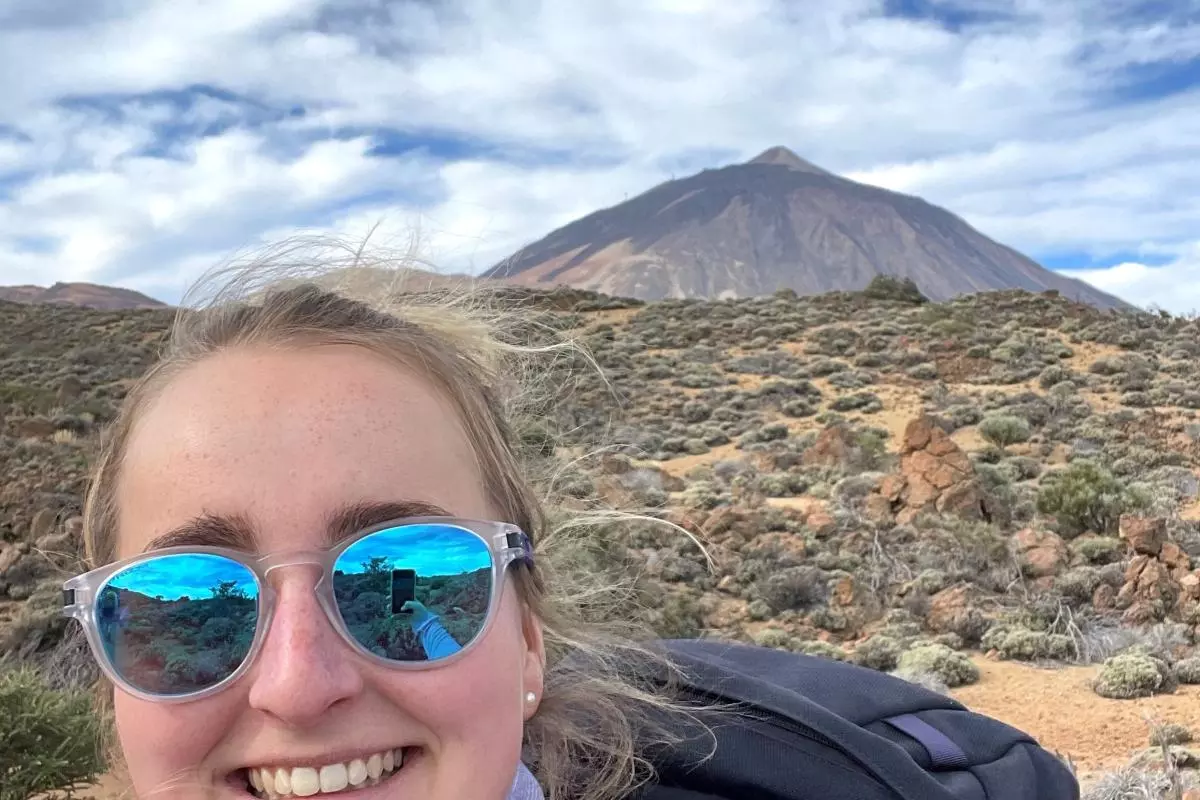
A postcard from Tenerife!
Image
Take a look at Prof. Victoria Smith's “postcard from the field” from the CAVES tephra group's Tenerife trip, capturing a week of sampling volcanic deposits and exploring the island's stratigraphy. Read it here!
Trace element analysis, Feb 2026
Image
Tephra group members Elo and Danielle are analysing the trace element composition of volcanic glass from Tenerife samples using laser ablation ICP-MS at Royal Holloway University. These data will support improved correlation of tephra within distal archives.
Team tephra attend VMSG, Jan 2026
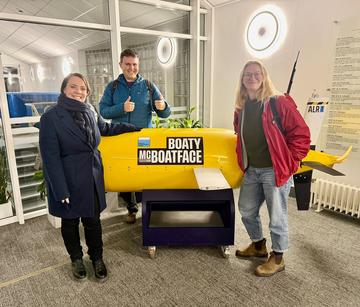
Several members of the CAVES tephra team attended the Volcanic and Magmatic Studies Group meeting in Southampton. It was a great opportunity to share new CAVES-related work and connect with the community...plus a surprise special guest!
Image
New publication from the CAVES Project, September 2025
We are pleased to share a new paper led by Emma Horn as part of the CAVES Project. The study presents the glass geochemistry of 15 major explosive eruptions from São Miguel and Terceira (Azores) over the past ~100,000 years. This new reference dataset provides robust geochemical fingerprints that enable the identification and correlation of Azores-derived tephra across Europe, Africa, and beyond, strengthening regional tephrochronological frameworks.
CAVES members Elo and Danielle travelled to Cluj, Romania to present results at the INTIMATE network meeting.
Newly Published Open Access Paper, August 2025
Over the past quarter-century, archaeological and scientific research in Northwest Africa, especially Morocco, has redefined our understanding of the transition from the Middle Stone Age (MSA) to the Later Stone Age (LSA). The region's rich heritage of cave and shelter sites has yielded new clues about how early humans adapted, innovated, and changed over tens of thousands of years.
A new paper by Barton, Bouzouggar, Carolin, and Humphrey, published in the Journal of the Royal Anthropological Institute, synthesizes these discoveries and reappraises key questions regarding the timing, behaviour, and continuity of human occupation from ~300,000 to ~15,000 years ago.
Several members of the CAVES Project attended the 27th Biennial Meeting of the Society of Africanist Archaeologists (SAfA 2025), held from 21–26 July at the University of Algarve in Faro, Portugal, and hosted by ICArEHB – the Interdisciplinary Centre for Archaeology and Evolution of Human Behaviour.
This year's conference theme, Crossroads through Time, highlighted the Algarve as a historic and cultural nexus between North Africa, Europe, and beyond—an ideal setting to explore the deep past of human mobility, adaptation, and interaction.
CAVES researchers contributed to Session 43: Early human behaviour and environmental change in the Middle and Late Pleistocene of Morocco. You can view the session abstracts here.
Elo visits the Azores, May 2025
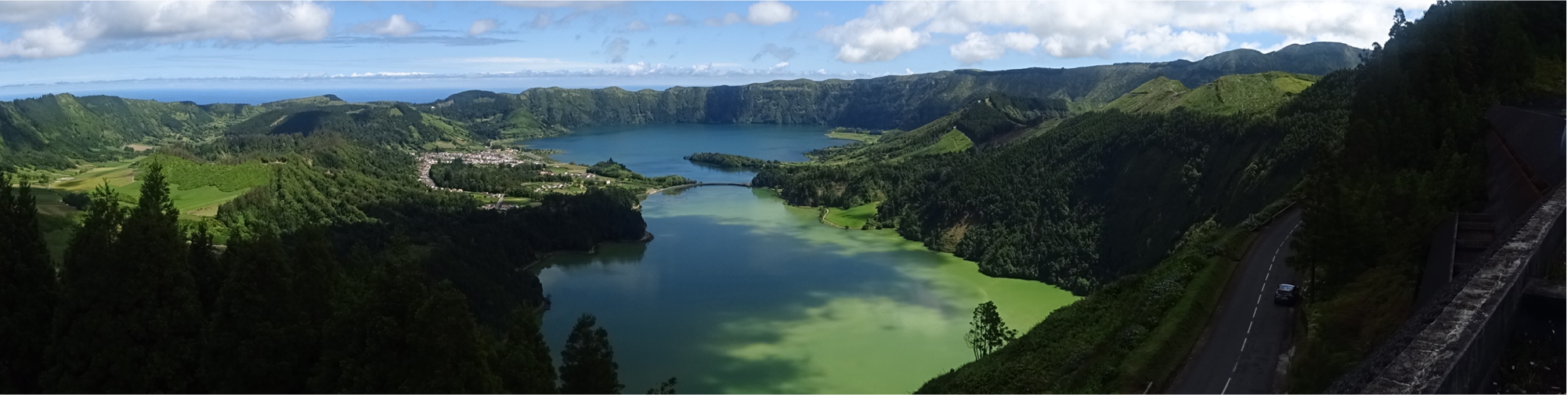
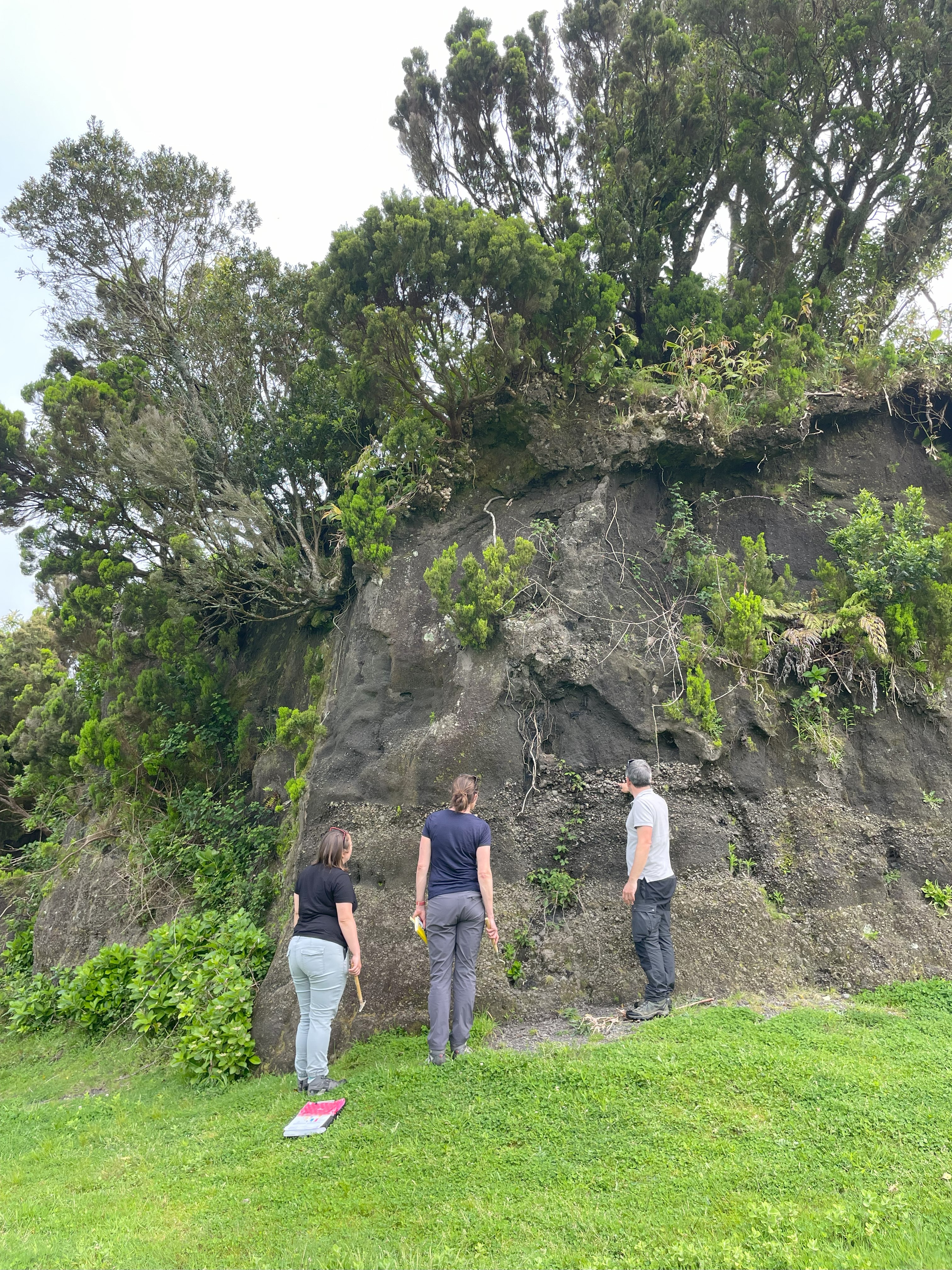
In May 2025, Elo Wilkinson-Rowe attended the 2025 International Summer School on ‘Geological Hazards on Volcanic Islands' run by IVAR, the Research Institute for Volcanology and Risk Assessment, at the University of the Azores in Ponta Delgada, São Miguel, Azores. This was an 8-day long course on different environmental hazards (i.e., eruptions, gas emissions, earthquakes, landslides, tsunamis) that populations are exposed to on volcanic ocean islands. Elo also got the opportunity to visit several of the volcanoes on São Miguel (incl. Sete Cidades, Fogo, Furnas, and the Picos fissural system) over a 2 day field trip. The eruptive histories of these volcanoes will be explored further as part of her PhD project with the CAVES Project.
Image
Tephra Team visit Bremen IODP Core Repository, Dec 2024
The CAVES Tephra Team visited the IODP core repository in Bremen, Germany. Several North Atlantic marine cores were logged and sampled for the ongoing visible/cryptotephra investigations. The cores contain large explosive eruptions from the nearby volcanic sources of the Azores and Canary Islands. We analyse the composition of the volcanic glass to correlate them to the specific eruptions.
Monty joins the team! Jan 2025
Monty Ochocki is joining the CAVES Project Team as a Postdoctoral Researcher - welcome Monty!
New paper! McLean et al. (2024)
The CAVES Project Team have published an article in the BILNAS journal Libyan Studies which is available Open Access here.
This article summaries the opportunities to synchronise and date archaeological and climate records in NW Africa using volcanic ash (tephra) layers.
AGU Conference, Washington, D.C., Dec 2024
Bryce Mitsunaga presented their CAVES poster at AGU 2024 with the title of the presentation "Climatic Forcing of Human Evolution and Migration in Late Pleistocene Northwest Africa: Paleohydrology, -Vegetation, -Fire, and -Temperature Insights from ODP Site 958 and GeoB 4216". The poster is available to view below:
12th Meeting of Moroccan Quaternarists in Marrakech, Nov 2024
Dr Emmanuelle Stoetzel presented CAVES enamel isotope research in a poster designed by Dr Stacy Carolin at the 12th Meeting of Moroccan Quaternarists, held in Marrakech from 7th -9th November. The title of the presentation was “Moroccan Middle Stone Age environmental change inferred from fossil rodent tooth enamel isotopes.” The poster is shared here:
Annual progress Report 2023-2024
An update of the CAVES Project progress and activities is given in the link below, with special thanks to our collaborator Prof Abdeljalil Bouzouggar, Director of the Institut National des Sciences de l'Archéologie et du Patrimoine, Morocco.
Excavations at Grotte des Pigeons, Taforalt, September 2024.
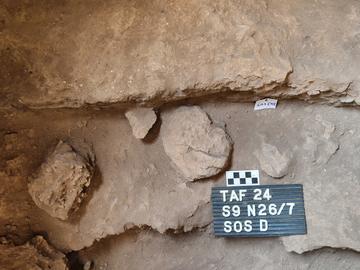
Excavations were focused on sampling the MSA layers for environmental proxies to reconstruct climate change over the last 50,000 years.
Image
Excavation of Lower Hearth units in MSA deposits in Sector 9 at Taforalt, September 2024
Image
Investigation of an MSA hearth structure in Sector 9 at Taforalt, September 2024.
Elo joins the team! Sept 2024
Eloise Wilkinson-Rowe is starting their PhD as part of the Oxford DTP and will be joining the CAVES Project - welcome Elo!
COT-INTIMATE-THM Conference in Catania, Sept 2024
Dr Emma Horn and Dr Danielle McLean presented CAVES Research at the Commission on Tephrochronology (COT) meeting in Catania. Emma presented “Geochemical insights into major explosive eruptions from the Azores”. Danielle presented an overview of the CAVES project with a presentation entitled “Volcanic ash layers to synchronise archaeological and climate records in NW Africa”. ECR funding support to attend the conference was generously provided by INTIMATE and IAVCEI.
Danielle was also awarded a runner up ECR prize for her Outstanding Oral Presentation.
Image
Field Trip to Tenerife (Canary Islands, Spain), July 2024
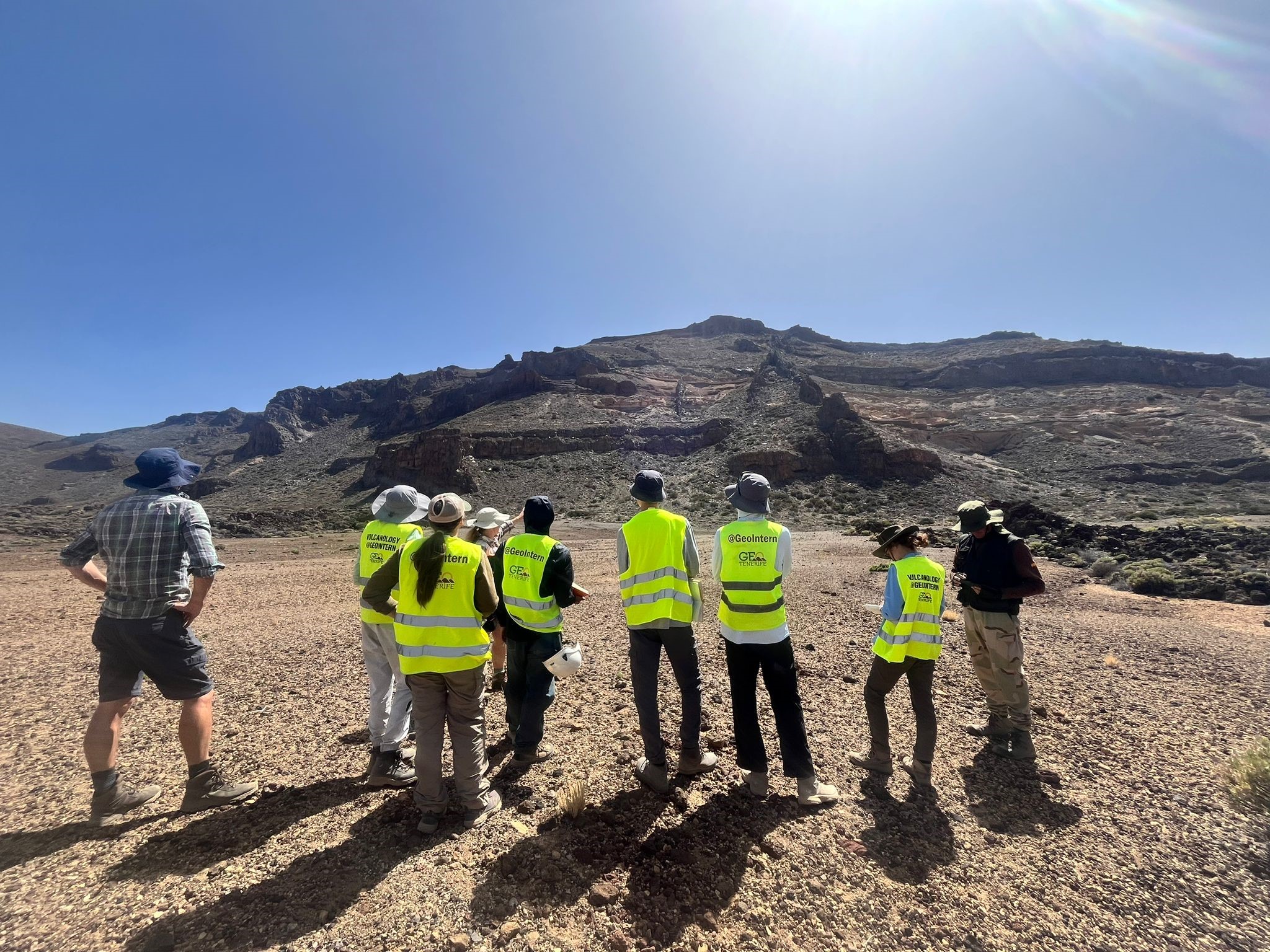
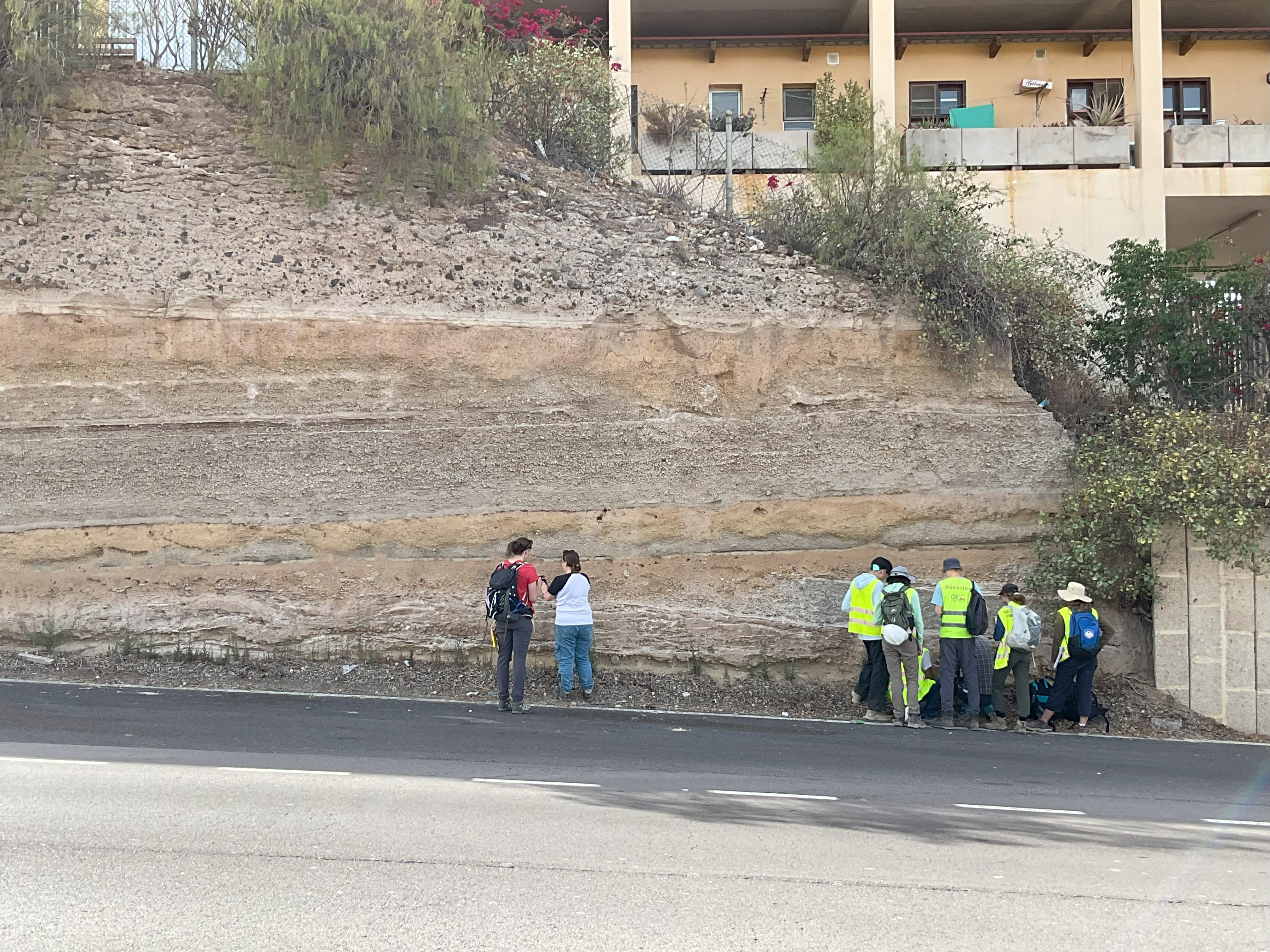
The CAVES Oxford Tephrochronology Team (Prof. Victoria Smith, Dr Emma Horn & Dr Danielle McLean) were joined by Dr Richard Brown (Durham University) and GeoInterns from the 2024 GeoTenerife training programme for a week to sample the 300 - 170 ka stratigraphy of the Tenerife Las Cañadas deposits in the caldera wall and along the coast of the island.
This fieldwork was funded by BILNAS as part of Emma Horn's project ‘Refining the eruption chronology of Tenerife (Canary Islands) as a tool for understanding cultural evolution in early humans in NW Africa'. With the aim to compile a large tephra glass geochemical database in order to identify both the number of discrete Canary Island eruptions and the geochemical signatures associated with each eruption.
UK Archaeological Sciences (UKAS) Conference, York, April 2024
Dr Stacy Carolin traveled to York to present at the UK Archaeological Sciences (UKAS) Conference. Stacy's CAVES poster presentation can be viewed below!
Funding Support from the British Institute for Libyan and Northern African Studies, March 2024
Danielle McLean has been granted a North Africa Postdoctoral Writing Fellowship of £8,000 to fund writing-up of already completed research.
Emma Horn has received £3,000 in project grant funding from BILNAS for her project "Refining the eruption chronology of Tenerife (Canary Islands) as a tool for understanding cultural evolution in early Africans in NW Africa”. This funding will be used for fieldwork in the Canary Islands this summer to collect proximal samples with the aim of improving tephra correlations for both the marine core sequences and older cave sequences in Morocco.
Bryce joins the CAVES project team! March 2024
Dr. Bryce Mitsunaga starts with the Terrestrial Paleoecology Lab at Harvard University after completing his PhD at Brown University. Welcome Bryce!
“Agencies of Behavioural Change in Early Humans in North Africa” by Prof. Nick Barton.
Annual Lecture November 2023 to the British Institute of Libyan & Northern African Studies.
Funding Support from The Royal Society, November 2023
Stacy Carolin and Scott Blumenthal (University of Oregon) have received funding from The Royal Society's International Exchanges scheme to support their new collaborative efforts to explore the use of laser-ablation stable isotope analysis on very small rodent tooth enamel. Prof. Scott Blumenthal has extensive expertise in the application of stable light isotopes for investigating the ecology of mammals through laboratory- and museum-based projects on both fossil and living animals. His lab at the University of Oregon is one of the few in the world which specialises in laser-based micro-sampling methods for isotopic analysis of rodent tooth enamel. Laser ablation isotopic analysis is ideally suited for analysing particularly small rodent teeth, which are often the most prevalent in fossil sediments, but difficult to analyse using traditional methods.
Heather Upton joins the team for a UNIQ+ graduate access project working in our Tephrochronology Laboratory, July-August 2023. Read what Heather got up to during their eight-week internship here
INQUA 2023 Rome Conference, July 2023
Prof. Victoria Smith and Dr Danielle McLean travel to Rome to present at INQUA 2023 (International Union for Quaternary Research). Danielle's CAVES poster presentation can be viewed below!
Funding Support from NEIF
Danielle McLean and Emma Horn had their NEIF (National Environmental Isotope Facility) project application fully supported, entitled ‘Constraining the chronology of eruption sequences across the Azores archipelago'. The NERC ‘Grant-in-kind' full ecomonic cost (FEC) is £8,489 for nine radiocarbon dates for organic samples across the Azores.
Funding Support from the British Institute for Libyan and Northern African Studies
Stacy Carolin has received £7,940 in project grant funding from British Institute for Libyan & Northern African Studies (BILNAS) for her project "Resolving the impact of environmental change on Middle Stone Age humans in North Africa”. This funding will assist in developing and refining the non-destructive approach of laser ablation for museum-archived small rodent teeth isotopic analysis. The isotope measurements on fossil teeth will be used to reconstruct past humidity at three sites in Northern Morocco during the Middle Stone Age.
Field Trip to Central Islands (Azores), May 2023
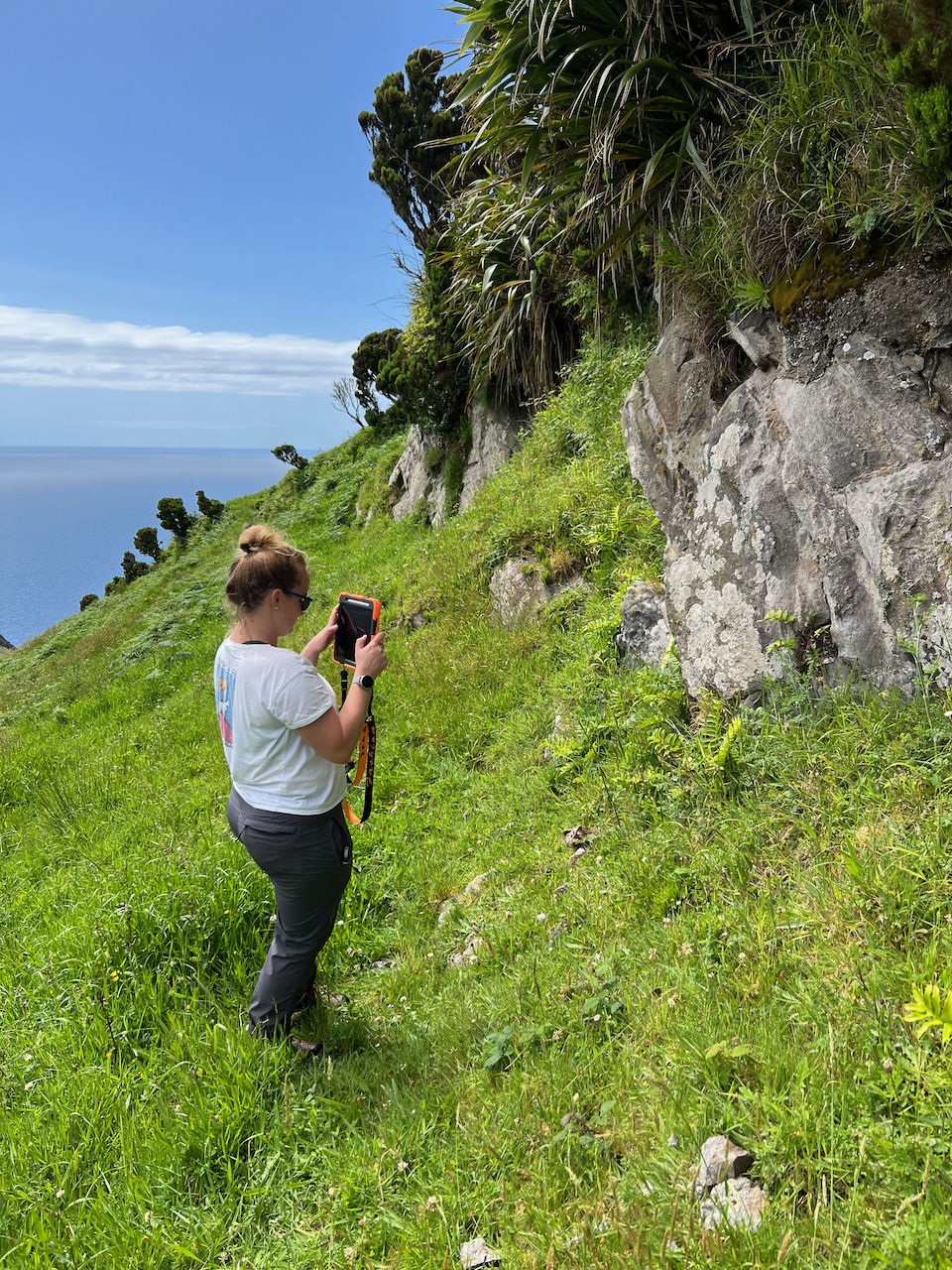
The CAVES Oxford Tephrochronology Team (Prof. Victoria Smith, Dr Emma Horn & Dr Danielle McLean) were joined by Dr Adriano Pimental for a two-week sampling trip to the islands of Terceira, Graciosa and Faial. Continuing the work from the previous visit to the Azores in October, the team sampled volcanic deposits from each of the different volcanic centres with the aim of compiling a large tephra glass geochemical database for explosive eruptions across the Azores. 126 samples were collected on this trip and brought back to Oxford, where sample preparation and major element analysis will be undertaken.
Visit with Dr. Emma Stoetzel at the Musée de l'Homme, Paris
During the last week of March 2023, Stacy Carolin traveled by train to Paris to meet with project collaborator Dr. Emmanuelle Stoetzel and to collect samples of modern and fossil mouse and gerbil teeth for isotope analysis. Tooth samples for isotopic analysis were chosen from the collections of Dr. Emmanuelle Stoetzel, Dr. Violaine Nicolas, and Prof. Christiane Denys, currently stored at the Musée de l'Homme (fossil) and the Muséum National d'Histoire Naturelle (modern) in Paris. The fossil tooth samples were originally collected from El Harhoura 2 and El Mnasra caves, located on the Atlantic coast near Rabat, Morocco. The Mission Archéologique El Harhoura-Témara (Ministry of Foreign and European Affairs in France, Ministry of Culture in Morocco, directed by Roland Nespoulet and Mohammed Abdeljalil El Hajraoui) procured the material, and the Institut National des Sciences de l'Archéologie et du Patrimoine (INSAP), in Rabat, allowing export of the materials for study.
Funding support from the Boise Trust to date Azores eruptions, March 2023
Dr Danielle McLean (CAVES Oxford Tephrochronology Team) was awarded Boise Trust funding for their research proposal ‘Establishing new dating constraints for archaeological and climate records in NW Africa'. This funding will allow several key eruptions on São Miguel Island (Azores) to be argon-argon dated using samples of the pumice and ash. These dates will generate new constraints on the timing and frequency of past eruptions, and offer new absolute ages to be imported into other sedimentary records containing the ash.
Stacy joins the team! March 2023
Dr Stacy Carolin joins the CAVES Project stable isotopes Team - welcome Stacy!
IAVCEI 2023 New Zealand, January 2023
Dr Danielle McLean and Dr Emma Horn travel to New Zealand to present their work at IAVCEI (International Association of Volcanology and Chemistry of the Earth's Interior) an international volcanology conference attended by over 800 scientists from across the world. Read about the trip in a presentation report by Emma published in the VMSG (Volcanic and Magmatic Studies Group) Newsletter.
Emma joins the CAVES project team! January 2023
Dr Emma Horn starts with Oxford Tephrochronology Team after completing their PhD at the University of Southampton.
Trip to Rabat (Morocco), November 2022
Prof Nick Barton, Amy Styring and Victoria Smith visited Rabat, Morocco for the 11ème Rencontre des Quaternaristes Marocains (RQM11) conference to meet collaborators and present details of the project. They also went into the field and took samples from Contrebandiers and Dar es-Soltane 2 for cryptotephra investigations. This research is in collaboration with Jean-Jacques Hublin and Zeljko Rezek.
Field Trip to São Miguel (Azores), October 2022
In October 2022, the CAVES Oxford Tephrochronology Team (Dr Danielle McLean & Prof. Victoria Smith) visited São Miguel island to sample volcanic deposits around the three volcanic centres (Sete Cidades, Fogo and Furnas). This work was made possible by a generous Research Award from the British Institute for Libyan & Northern African Studies (BILNAS) and was undertaken in collaboration with Dr Adriano Pimental, Dr José Pacheco and Simone Aguiar at IVAR (Instituto de Investigação em Vulcanologia e Avaliação de Riscos, University of Azores). Over 130 samples were collected from outcrops around the island, which will be geochemically characterised to fingerprint the eruptions and secure correlations for distal ash identifications.
Excavations at Taforalt Cave, September 2022
Excavations continued at Taforalt Cave (Grotte des Pigeons), Morocco in September. Prof. Nick Barton and Dr Danielle McLean from the CAVES Team took new samples continuously through Sector 9 and Sector 12 which will be assessed for the presence of non-visible (cryptotephra) ash layers.