

Funded studentship opportunity on: Technological Processes & Social Organization in Early Northern China project with Dr Anke Hein
The Project
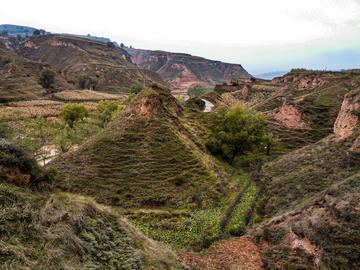
Majiayao site, photo credit: Dr Anke Hein
The Yangshao Period of Neolithic northern China, dating back to around 5000-2500 BCE has received much attention for his high-quality painted pottery and its significant impact on later communities across northern China and in the Central Plain. Similarly, the spread of jade working across much of early China starting with Hongshan (4700-2900 BCE) has been the focus of much research. So far, most research has focused on object typologies and chronologies. What is less well understood is the organization of object production and consumption and their interplay with broader social organization in Neolithic and Bronze Age societies across northern China.
This project seeks to make progress towards filling these lacunae by employing an interdisciplinary approach, combining archaeology, anthropology, and material science to investigate the intricacies of social organization within these different communities across early northern China and the connections between them. On a broader theoretical level, taking early northern China as an example, the project will provide insights into the interplay between technological processes, social organization, and inter-group and inter-regional interactions in the formation of larger socio-political organizations and group identities, as well as the interplay between these developments and the landscape within which they were taking place.
Activities
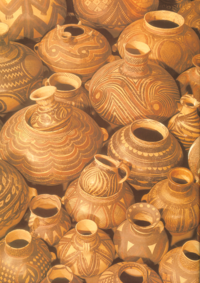
Neolithic ceramics, photo credit: Dr Anke Hein
This project takes an interdisciplinary approach with several scholars – including the DPhil student – jointly collecting information on archaeological sites and materials in a project database and then each person focusing on one particular type of material, sub-region, sub-period, and/or aspect of the broad research topic. Individual researchers may focus on one or several sub-regions within northern China (i.e. Gansu, Qinghai, northern Sichuan, Ningxia, Shsanxi, Shanxi, Henan, Hebei, Shandong, Inner Mongolia, Liaoning) and/or home in on one specific time slice and/or one or several archaeological cultures (e.g. Yangshao, Majiayao, Hongshan, Longshan, Qijia, Xindian Siwa, Kayue). Possible research foci include but are not limited to:
- Research into production technology and/or style and/or use of jade (nephrite and other hard stone) objects in parts of northern China during the Neolithic and/or Bronze Age.
- Research into changes and variations in ceramic technology over time and/or space using a combination of typological analysis, macroscopic investigation in to forming, petrographic analysis, chemical composition assessment, as well as experimental and/or ethnoarchaeological work.
- Research into ceramic usage from specific site(s) or sub-regions via an assessment of shape, use-wear analysis, and/or residue analysis in combination with a consideration of published zooarchaeological, paleobotanical, and isotope data.
- Geospatial analysis investigating changes in site distribution and human-environment interaction over space and time.
- Network analysis investigating connections between regions and sites in terms of shared
material culture and/or various cultural practices. - Investigation into social organization and its variation over time and/or space based on
analysis of mortuary and/or settlement data.
The Studentship
The project will fund one full-time DPhil student for 36 months from 1 October 2026. The studentship will cover tuition fees to the ‘home’ rate and an annual stipend at the UKRI rate (currently £20,780p.a.). The successful student will be registered for a DPhil within the School of Archaeology. Limited funding for research travel, sample preparation, and other activities connected with the research will be available from project funds, the School of Archaeology, and the student’s college. The PhD will be supervised jointly by Dr Anke Hein and Dr Guohua Yang.
Entry Requirements
In addition to the standard entry requirements for admittance to a DPhil within the School of Archaeology, the successful student will have a strong background in a relevant subject area and a demonstrable interest in one or several of the research questions mentioned above. Intermediate or
higher Chinese-language skills are essential. Depending on the chosen focus area and methods, some prior training in some aspects of ceramic and/or lithic analysis, spatial analysis, statistical applications, or experience with programming may be of advantage but is not essential. Further training in some of these methods will be available in connection with the project.
Application procedure
To be considered for this studentship, please submit an application to the DPhil in Archaeology. Information about applying is at https://www.ox.ac.uk/admissions/graduate.
The research proposal to be submitted as part of the application materials needs to state clearly what sub-region(s), material(s), method(s), and research questions (either from the list above or other relevant questions) the candidate would like to focus on, how their previous training prepares them for
this work, and what further training they would need.
Further Information
Informal enquiries should be directed to Dr Anke Hein or Dr Guohua Yang

