

Sounds of Silence

Landscape surrounding the Tomba Francesca Giustiniani (Tarquinia) 500-450 BCE
From the perspective of human cognition, sound does not exist without a listener. However, when perceived, sound can profoundly shape human experience. These realities have striking implications when considering endangered ancient landscapes and their corresponding sounds or ‘soundscapes.’ The Etruscans, a pre-Roman civilisation centred in central Italy, saw auditory experiences such as bird calls, thunder, and music as prophetic in nature and yet, Etruscan soundscapes are largely understood today from visual perspectives. Hence, these landscapes survive in silence, as muted reminders of a now extinct society's former prowess and notably, its well-documented connection to sonic experience.
This project, funded by the Leverhulme Trust (2025-2028) investigates how sound may have informed the designation and continuity of Etruscan landscapes. The aim is to not only investigate the role that ancient soundscapes served in the ancient world, but to also consider how ancient soundscapes can play an important role in fostering cultural engagement today while also enhancing climate resilience efforts through direct sensory experience. This pioneering approach has the potential to reframe diverse ancient landscapes suffering from environmental decline as new sources of cultural identity, cohesiveness, and well-being.
Climate Change
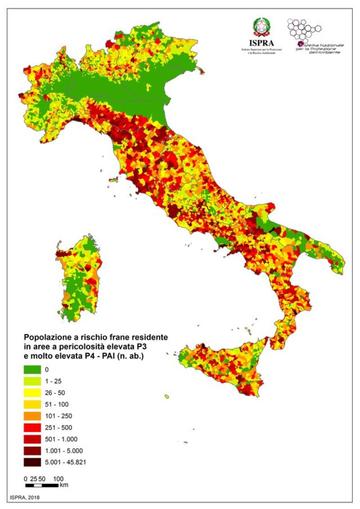
Climate change significantly threatens ancient landscapes, particularly those in southern Mediterranean contexts more critically affected by extreme weather phenomena. Landslide risk, wildfires, and flooding typify climate related changes affecting central Italian ancient landscapes:
Landslide risks affecting modern central Italy
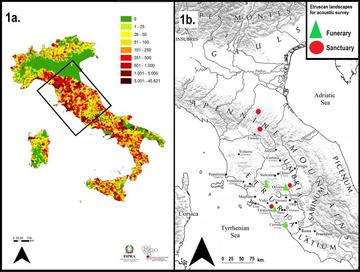
1a. Ancient Etruria outlined in black. 1b. Map of Etruscan urban and rural settlements with study sites highlighted in green (funerary landscapes) and orange (sanctuary landscapes).

Dr Jacqueline K. Ortoleva is the Project Director for Sounds of Silence.
I am a cognitive archaeologist with particular interest in critical heritage at southern Mediterranean archaeological contexts. My former background as a Psychotherapist in experimental psychology and neuroscience has influenced my approach to the archaeological record.
Jacqueline's research is funded by Leverhulme.
Project Mentors
Dr Timothy Clack, University of Oxford
Prof Lambros Malafouris, University of Oxford
Project Advisors -
Prof Simon Stoddart, University of Cambridge
Prof Gregory Warden, Southern Methodist University
Prof Giovanna Bagnasco, Universita degli Studi di Milano
Dr Laurel Taylor, UNC Asheville Art and Art History
Prof Andrew Barnard, Michigan Technological University
Prof Elisabetta Govi, Universita di Bologna
Alessandro Naso, Universita degli Studi di Napoli Federico II
Prof Tamar Hodos, Director of the Australian Archaeological Institute at Athens, University of Sydney
Daniele Federico Maras, Director Museo Archeologico Nazionale, Sapienze Universita di Roma
Prof Maurizio Forte, Duke University
Dr Francesco Aletta, University College London
Fieldwork Coordinators
Corso Dominici, DPhil Classical Archaeology, School of Archaeology, University of Oxford
Irene Torreggiani, DPhil Archaeology, School of Archaeology, University of Oxford
Research Assistants
Susan Woods
Follow us on our Instagram


