
SIBA - Stone Interchanges within the Bahama archipelago
SIBA - Stone Interchanges within the Bahama archipelago

Celts from various Turks and Caicos archaeological sites, collected by Grand Turk resident George J. Gibbs in the 19th century, now housed at the American Museum of Natural History.
Stone tools are the hallmark of prehistoric settlements around the world: in the Caribbean, as elsewhere, they were essential for basic tasks such as food processing, wood carving, etc. In addition they could serve as markers of prestige, especially as they were all from non-local sources. Being entirely limestone islands, the vast Bahama (Lucayan) archipelago – comprising over 700 islands and some 3000 cays – is unique in the Caribbean in entirely lacking hard stone (flint, basalt, jadeitite). Was this lack of such a critical resource a contributing factor to their late settlement (post-AD 600), despite occupation on neighbouring Cuba and the Dominican Republic/Haiti going back millennia? And once settled, how was access to hard stone achieved, and what does this tell us about people’s abilities to adapt to challenging environments?
Project SIBA (‘stone’ in Classic Taíno dialect), funded by the Arts and Humanities Research Council, aims to characterize the regional social networks that bound the Lucayan archipelago to the wider Caribbean region, and so provide an understanding of the creation and maintenance of indigenous exchange networks, and their associated economic, cultural and socio-political impacts. One direct means of exploring these issues is through the study of the imported material culture itself, including identifying an artefact’s provenance through its diagnostic chemical and isotope ‘signature’ using state of the art geochemical techniques. An artefact’s distinctive style or iconography (what the artifact depicts and its possible significance) are a complementary means of ‘sourcing’ artefacts. The absence of convincing stylistic similarities in artefacts from neighbouring regions would imply the local reworking of stone in the creation of a distinctive Lucayan cannon, expanding understanding of Lucayan carving styles, which are themselves poorly known.
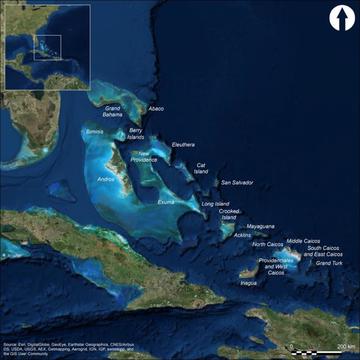
The project works from the micro-scale (e.g., materials, manufacture, iconography, local context, etc.) to the macro-scale (Lucayan archipelago distribution of individual materials and their sourcing in the wider Caribbean region) to explore the connections between people and the stones they worked, exchanged and valued. By examining pre-colonial exchange networks in some detail, the project seeks to better understand resilience and sustainability in a resource-poor island context, and to question the core-periphery relations that have dominated discussion in Bahamian archaeology.
A major output of the project will be the physical and chemical characterisation of a large body of worked stone, fine-tuning our understanding of the movement of stone valuables across the ‘Caribbeanscape’. SIBA thus has the potential of making a significant contribution to understanding the establishment and maintenance of new communities in previously uninhabited island settings, as well as fully integrating the archaeology of the Lucayan archipelago within the wider Caribbean perspective
Project SIBA (siba [ciba] is the term for ‘stone’ in Classic Taíno dialect) brings together over 300 ‘exotics’ held in eight international museums, the largest study collection of Lucayan stone artefacts ever assembled. Combining a range of studies bridging the arts and sciences (e.g., petrology, iconography) with state-of-the-art, minimally invasive isotope geochemical studies, we aim to explore the wider social, political and economic connections between the archipelago and its wider Caribbean setting.
Research questions include:
- What hard stone materials were imported into The Bahamas/Turks and Caicos Islands and, crucially, from where? Did different Bahama/TCI islands or groups of islands exploit different stone sources? This is key to understanding the extent of exchange networks that connected people across, and potentially beyond, the Caribbean.
- Does a local (Bahama/TCI) style emerge, or do stone artefacts conform stylistically to the original source islands? The curation of finished ‘foreign’ objects suggests a very different underlying social meaning than the re-working of exotic stone into local styles.
- Was there a preference for particular stone materials/artefacts and was this preference based on availability, material properties, function, symbolic value, long-distance ‘exoticness’ or a combination of these?
- Did Bahamian islands with evidence for high status artefacts such as duhos (ceremonial seats), also have a high incidence of imported stone artefacts, and were these artefacts sourced from a specific island (e.g., Hispaniola or Cuba) or more widely? This will inform on socio-cultural developments and inter-island connections.
- Given the difficulty in acquisition of these materials, and their circulation over potentially long distances, can we document re-working (e.g., large celts reduced over time to smaller stubs), or are most in a pristine, un-used state (this goes to the issue of function vs. value)?
Our approach is integrative, spanning style, iconography, provenance and manufacture. The detailed geochemistry and petrology data will provide provenance information, and a context for assessing the wider implications and significance of the artefacts. This study will provide a wealth of new data for Bahamian/TCI imported stone artefacts in museum collections, facilitating a discussion of their meaning to the people who made, traded and valued them.
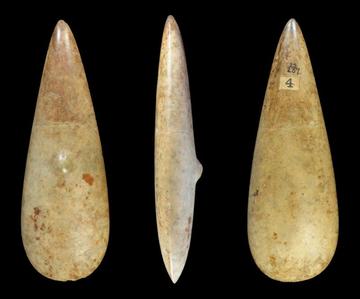
Three views of a jadeitite celt with bulbous protrusion on one face, collected on the Caicos islands before 1878; H: 255mm; W: 85mm; D: 46mm (max). Catalogue no. 25/237, courtesy of the Division of Anthropology, American Museum of Natural History.

A group of celts from various Bahamian islands in the Arnold collection at the Peabody Museum of Natural History, New Haven, USA. Courtesy Peabody Museum of Natural History.
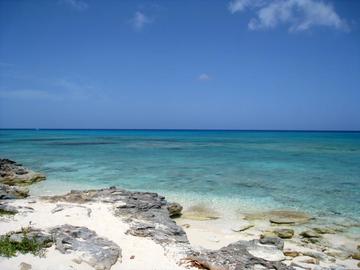
The azure waters surrounding Long Island
The Bahamas and Turks and Caicos were among the last Caribbean islands to be settled, not until ca. AD 600. There are ongoing debates on the origins and sequence of migration, based largely on ceramic styles: some propose that the central Bahamas were settled by migrants from northern Cuba, others from northern Hispaniola. Our current understanding of the archaeological record suggests that the islands were first used as seasonal outposts, and that it was not until after ca. AD 1000 that permanent settlements were established and populations increased. Some islands see the emergence of seemingly independent societies, as evidenced by locally produced Palmetto ware ceramics as well as a distinctive style of elite paraphernalia. These independent local groups, the exact nature of which is still being investigated, are encapsulated by the use of the term Lucayan.
The exchange networks through which hard stones and other non-local materials arrived on the islands evolved from early, seasonal, special-purpose camps to later permanent villages. In this context, stone is a marker of social networks and pathways that allows us to investigate this adoption/adaption to Lucayan life. At what point exchanges extended beyond basic necessities to include high status items such as large stone carvings and celts is currently unknown, though it potentially paralleled sociopolitical developments in the neighbouring islands to the south. The earliest Lucayan ceremonial chairs (duhos) – the prerogative of high-ranking individuals – post-date AD 1000, suggesting an emerging interest in marking social hierarchies. By AD 1200, some sites on Middle Caicos have been interpreted as provincial cacicazgos (chiefdoms) of Hispaniola: goods may have flowed through them to reach other regions within the Lucayan archipelago in efforts to cement alliances and serve political or economic needs. Long Island, for example, was a centre of some importance from about AD 1300: the largest concentration of duhos have been found there, as well as other ceremonial items – such as vomiting spatulas traditionally used prior to the ingestion of the drug cohoba.
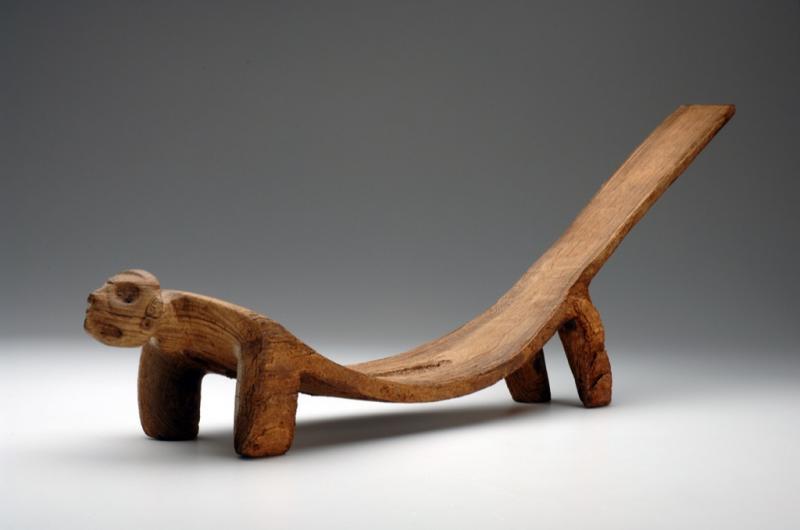
Duho, recovered with a feasting platter from a cave near Mortimers, Long Island ca. 1938. Guaiacum sp., AD 1285-1396; L: 860mm; W: 152mm; H: 292mm (max). Photo: Ostapkowicz, Courtesy, St John’s Abbey, Collegeville, Minnesota (acc. No. 89.190).
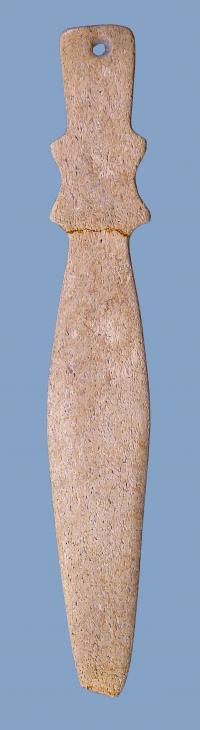
Vomiting spatula (for purging prior to the inhalation of the drug cohoba), recovered from Long Island; H:136mm; W: 21mm. Courtesy, Department of Anthropology, National Museum of Natural History, Smithsonian Institution, Washington (A554670-0).
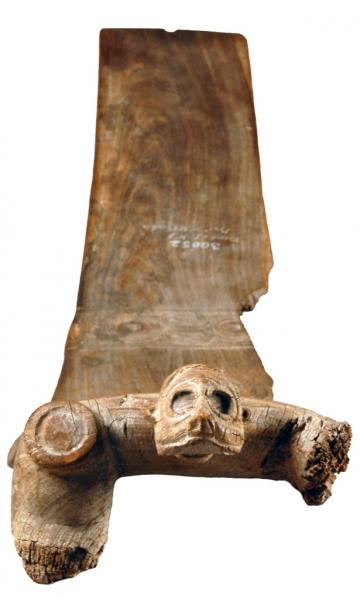
Duho recovered from a cave close to the Blue Hills Settlement, Providenciales, TCI. Guaiacum sp., AD 1413-1455 (90.6%); L: 1085mm; W: 180mm; H: 19mm (min. due to damaged hind legs). Courtesy, Department of Anthropology, National Museum of Natural History, Smithsonian Institution, Washington (catalogue no. A030052-0).
The people who came to settle the Lucayan archipelago initially maintained links to their homelands for necessities such as hard stone and ceramics, the latter typically in Ostionoid and Meillican styles. Eventually, people adapted to the archipelago, creating their own ceramics (a variety of Palmetto wares), and developing their own unique style of material culture– such as the largest duhos (ceremonial seats) in the entire Caribbean, featuring some of the most complex two-dimensional iconography. The Bahamas/TCI were also sources of abundant materials and goods that were, in turn, exported back to the southern islands, whether in raw or modified form: for example, Hispaniolan artisans came to Grand Turk to manufacture thousands of shell beads, traditionally used in body ornaments and such elite goods as cacical (chiefly) belts. The material culture of the region is thus a mixture of imports highlighting the networks linking the Lucayan archipelago to the wider region, and an emerging Lucayan style – the latter still poorly understood.
Some of the most spectacular discoveries – including duhos, paddles and vessels – were made during the late 19th century, when artefacts were recovered from caves being mined for guano for use as a fertiliser. Stone artefacts, including elaborate mauls, anthropomorphic and zoomorphic carvings, large celts and monolithic axes, were often recovered as surface finds from known archaeological sites – such as Belle Vue, North Caicos, Lorimers and Bambarra, Middle Caicos and Blue Hills, Providenciales. These artefacts entered private collections, with some eventually being deposited in museums – six institutions holding Bahamian/TCI cultural patrimony are partners on project SIBA [including National Museum of The Bahamas; TCI National Museum; Gerace Research Center; National Museum of the American Indian; National Museum of Natural History; Peabody Museum of Natural History]. One of the aims of this project is to bring these collections to wider knowledge, making the rich indigenous cultural heritage of the islands more accessible; another is to try to better understand the development of the unique Lucayan style.
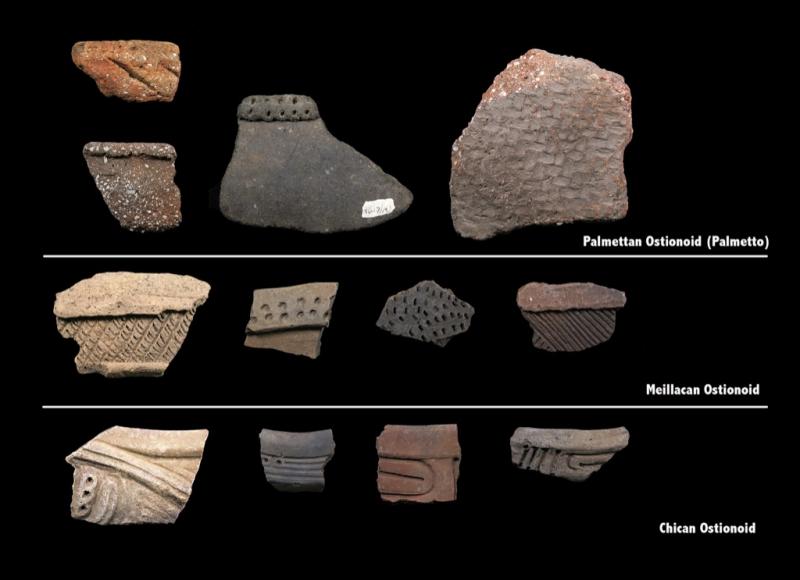
Top row: left to right: Abaco Redware, Abaco, AMMC, AB-17-89 (top); Palmetto ware, TCI, NMAI 090113.000 (bottom); Palmetto ware, flattened rim with vertical punctate pattern, Abaco, AMMC AB-17-115 (center); mat-impressed griddle sherd, Grand Turk, NMAI 059357.000. All Palmettan Ostionoid. Middle row: left to right: sherd, Jacksonville, East Caicos, NMAI 032211.000;last three sherds, all from Lorimers, M. Caicos, TCI (NMAI 034117.000) Bottom row: left to right: all Lorimers, M. Caicos, TCI (NMAI 034117.000)
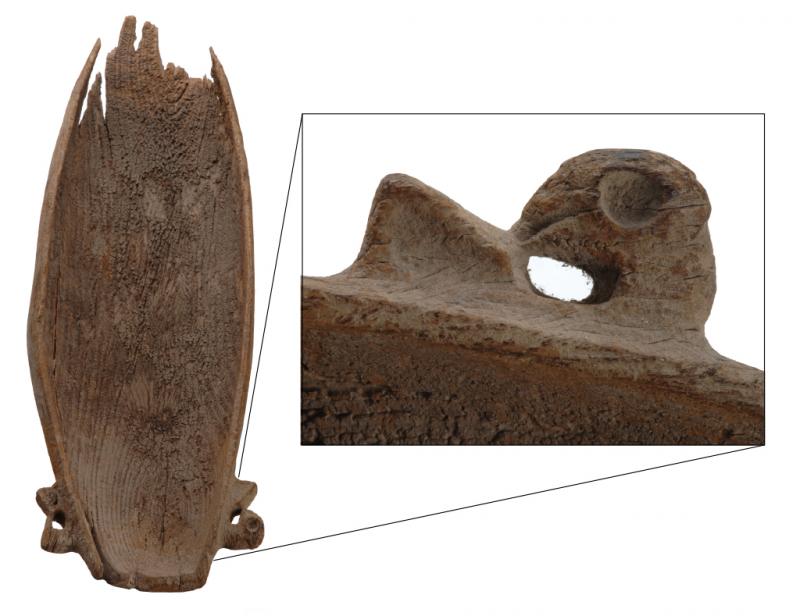
Feasting platter, recovered with a duho from a cave near Mortimers, Long Island ca. 1938. Guaiacum sp., AD 1019-1155; L: 602mm; W: 165mm; H: 89mm (max). Photo: Ostapkowicz, Courtesy, St John’s Abbey, Collegeville, Minnesota (acc. No. 89.189)
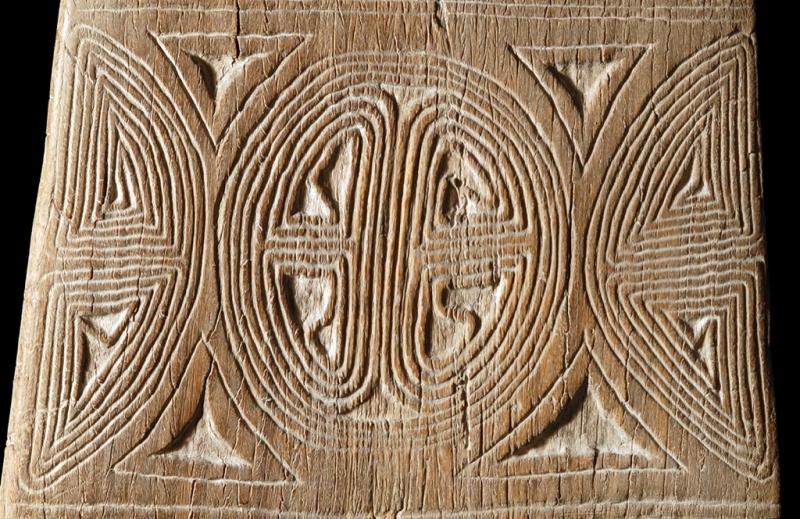
Bahamian duhos feature some of the most complex two-dimensional designs in the Caribbean, such as this panel on the back of a duho form the Caicos Islands. The design panel measures 130mm wide (max) and 90mm high (max). Courtesy National Museum of the American Indian, Smithsonian Institution (catalogue no. 059385.000).
Caribbean art is among the most dramatic achievements of the ancient Americas. Elegant Saladoid ceramics, ornate Chican Ostionoid styles, beautifully finished stone carvings (trigoliths, stone collars, ‘elbow’ stones) and elaborate ritual wood and cotton sculptures are among the material culture that survives. This wealth of imagery speaks of cultures rich in the visual arts. Yet while the stylistic repertoires of larger islands like Puerto Rico and Hispaniola are coming into greater focus due to a long history of interest and research, the iconography of smaller island chains such as that of the Lucayan archipelago remain less well known. Three reasons can be proposed for this: The Bahamas and TCI have not seen the same intensity of research effort, largely based on sporadic test excavations and surveys (long term, systematic excavations were only initiated in the 1980s); the thin soils of the islands – often only centimetres over bedrock – are not conducive to the development of stratified archaeological sites (the special case of shell middens and caves aside, but the latter were emptied of their guano deposits in the early history of the islands), and the semi-tropical environment generally hinders good preservation of organics. Yet, if the material culture of lowland South American indigenous cultures is anything to go by, it is likely that roughly 90% of what people surrounded themselves with – from mats, hammocks, houses and canoes to body ornaments, weapons, hunting equipment and containers – has not survived in the archaeological record. We have but glimpses of these ephemeral arts – from mat-impressed Palmetto ware to the rare carvings that were saved during the 19th century cave clearances, or in blue holes – such as the Stargate canoe (below). And the objects that do survive – such as duhos – feature some of the most complex designs in the Caribbean, suggesting that the Lucayans were skilled carvers.
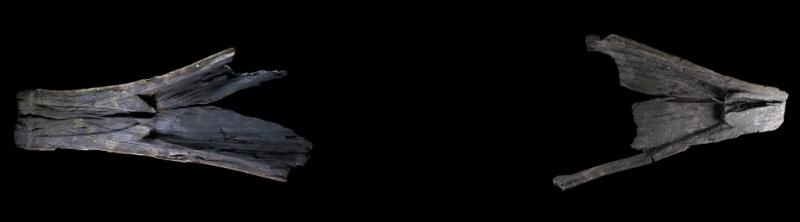
Canoe fragments recovered from the Stargate Blue Hole, Andros. The original size would have been small – just over 2 meters in length – suggesting that it may have served a more ceremonial than practical function. Courtesy Antiquities, Monuments and Museums Corporation (AMMC) collections.
Another issue for the Bahama archipelago is the need to first distinguish what was imported to the islands from neighbouring regions, and what was locally produced. Imports into the region came with the earliest settlers, but also with later exchanges that linked the northern Caribbean region into a large inter-island exchange network. But even with objects that appear stylistically foreign, we cannot, without detailed study, discount the possibility that they were made locally. The first steps in understanding Lucayan iconography is to search for distinctive differences between the regions. Palmetto ware, for example, is a uniquely Lucayan pottery with a burnt, crushed-shell temper (a material added to clay to provide strength): there is the suggestion that different regions produced different ceramics, including Abaco redware and Crooked Island ware. But in order to interpret these types of distinctions, we need a good regional overview of materials and styles – and that is something that will only emerge with time.
Future links on this page will provide activities that explore the iconography of the Lucayan archipelago.
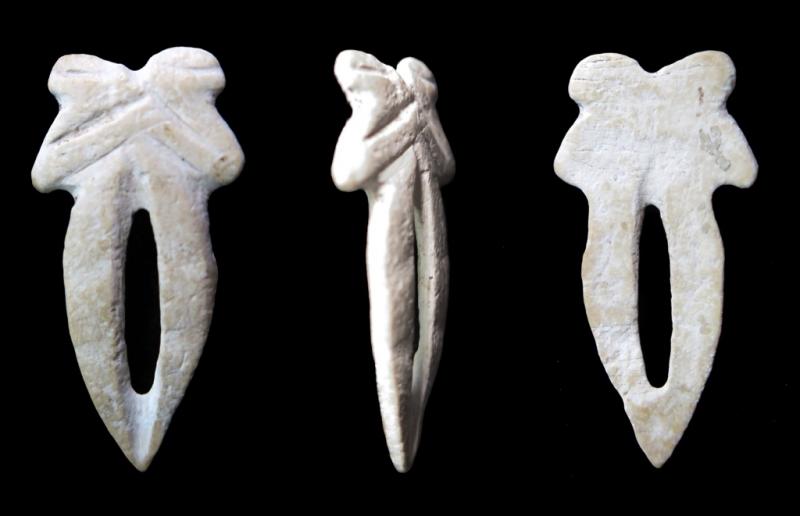
Three views of a carved shell ornament recovered from Rico’s Hill Site North, Abaco (AB-21). They are reminiscent of shell ornaments found in Cuba and Hispaniola, but were they imported from these southern islands or carved locally in the Northern Bahamas? H: 27mm; W: 14mm; D: 2mm. Courtesy Albert Lowe Museum, Green Turtle Cay, Abaco.
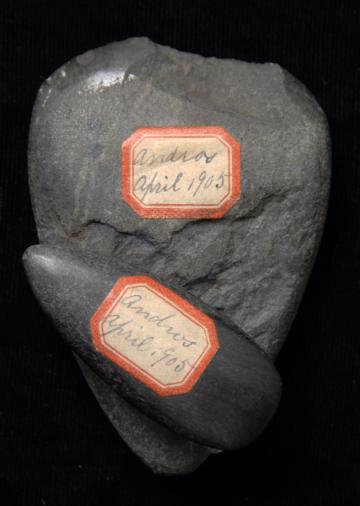
Two celts collected from Andros Island in 1905. Benjamin Arnold collection, Peabody Museum of Natural History, ANT. 137366 (bottom; H: 81mm), ANT. 137367 (top; H: 54mm)
The artefacts undergoing study extend across a variety of categories, from cemís (representations of spirits, ancestors or mythic beings), mauls and monolithic axes to celts. The simplicity of some of the objects belies their inherent value and importance, masking to some degree the complexity of their production, use and meaning. Some artefacts – such as the effigy celts and monolithic axes – remain enigmatic, and have had no systematic study. All are carefully made, the material selected for its aesthetic qualities. Jadeite and other greenstone artefacts appear to have had a deep significance in the circum-Caribbean region, with elaborate ornaments circulated over vast distances, as well as placed in burials and ritual deposits.
Stone imports to The Bahamas/TCI offer clear evidence for exchange – and quite likely concomitant socio-political ties – with communities on the large islands of Cuba and Hispaniola to the south, if not beyond. Over the last decade there has been an explosion of research interest in the movement of materials, people and animals within and beyond the Caribbean, though The Bahamas/TCI have remained largely peripheral to the emerging picture of dynamic networks. The archipelago is, however, an excellent focus area for this type of research: unlike the geologically diverse islands dominating the rest of the Caribbean, The Bahamas/TCI islands are entirely limestone – a fact that readily identifies any hard stones as imports.
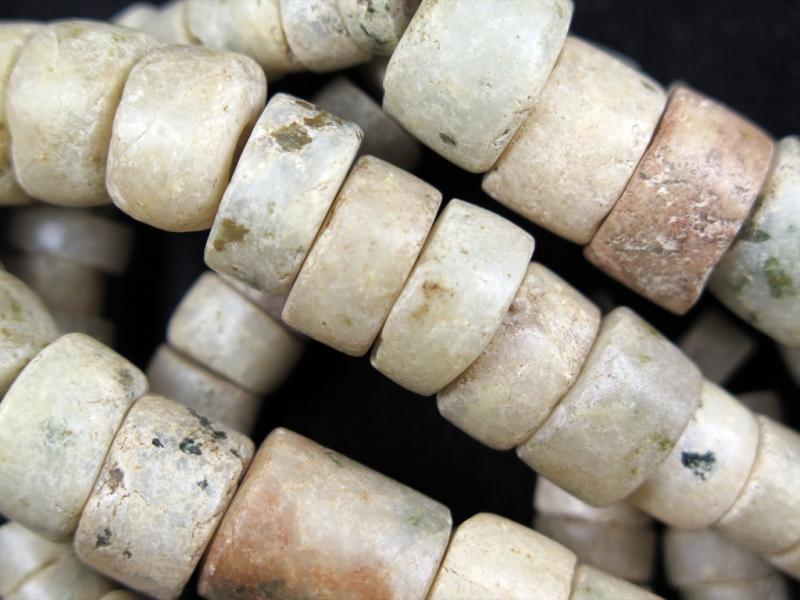
Over a hundred diorite beads recovered from a site near Stella Maris, Long Island. Diorite is a course-grained rock found in several parts of the Greater Antilles. Bead size ranges from a diameter of ca. 7-13.5mm. Courtesy Antiquities, Monuments and Museums Corporation collections.
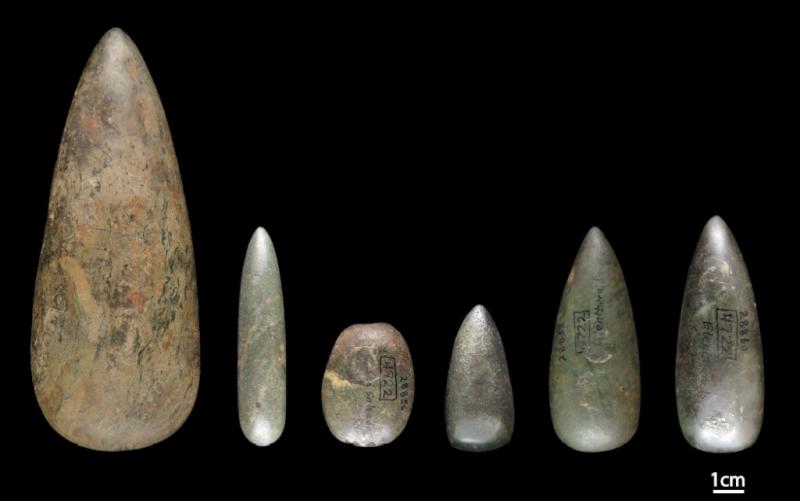
Celts collected by F. G. Rainey during the Armour Caribbean Expedition in 1934 from (left to right) Great Inagua, San Salvador (x2) and Eleuthera (2x). All courtesy Peabody Museum of Natural History, ANT. 028854, ANT. 028856, ANT. 028858-60.
Celts from The Bahamas/TCI were acquired over the centuries of colonial island occupation as both ‘curiosities’ and power objects, or ‘thunderstones’. Archaeologist Theodoor de Booy, visiting several Bahamian islands in 1911, recorded how local communities considered celts as potent sources of protective power, created when lightning struck the ground. They were often found in crop fields, and hence have little associated information beyond village, region or island. This did little to quell interest in them from both local and international collectors during the 19th/early 20th centuries, when they were among the key artefacts acquired for private and museum collections. Many artefacts now languish on museum shelves, sometimes dozens to a box, with at best cursory information when displayed. Yet each has inherent information: their petrology holds great potential to contribute to establishing their provenance and contributing to debates of past interactions/exchanges, and their size, shape and use-wear can inform on manufacture, function and related value systems.
The project involves a study of the chaîne opératoire of celt manufacture – from raw material procurement through its manufacture, use and discard – with the aim of establishing object life-histories, revealing not only the mechanical process of production, but the cultural systems responsible for such finely polished, curated tools. This, in turn, connects to the larger social, historical and environmental contexts.
Future web pages will feature the variety and range of Bahamian/TCI celts, and explore the results of the project in more detail.
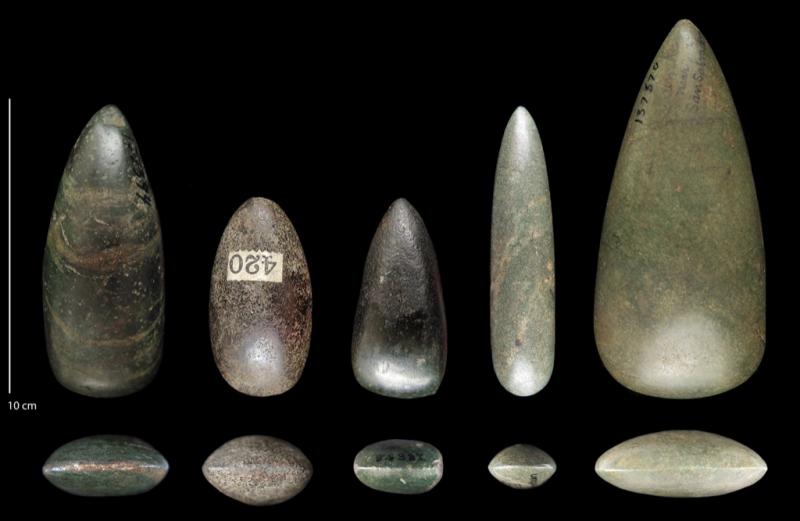
Five celts from the Bahamas, including the islands of Eleuthera (3rd from left), Great Inagua (4th from left) and Rum Cay (far right). All, courtesy Peabody Museum of Natural History (left to right: ANT.137394, ANT.137368, ANT.28858, ANT.28854, ANT.137370).
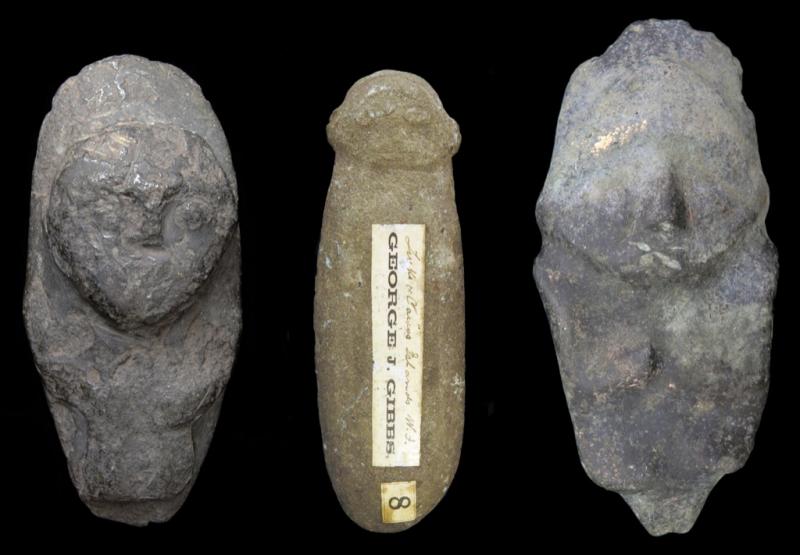
Left; Effigy celt, Bahamas, H: 200mm; Peabody Museum of Natural History, ANT. 137362; Centre: Effigy celt, Caicos, H: 186mm; Catalogue no. 25/241, courtesy of the Division of Anthropology, American Museum of Natural History; Right: Effigy celt, Great Inagua, H: 245mm; courtesy National Museum of the American Indian, Smithsonian Institution, Washington (113518.000).
A more elaborate category of Bahamian/TCI celt is carved with an anthropomorphic figure to one side, typically featuring a head, and occasionally arms and legs. The features range from shallow, 2-dimensional depictions to high relief. Such carvings are relatively rare in the Caribbean, predominantly isolated to the northern Greater Antillean islands of Cuba and Hispaniola (Haiti/Dominican Republic). Many are impressive, large and heavy carvings, more sculpture than celt – without doubt they would have been prized items, though their function or purpose remains enigmatic, much like the other impressive stonework the Caribbean is well known for (e.g., trigoliths, stone collars, elbow stones, etc.). The archaeologist Jesse Walter Fewkes, writing in 1915, noted: “The form and symbolism of the petaloids with life figures engraved upon them have led [me] to the belief that these celts were never furnished with handles, but were used symbolically as insignia of rank, and carried directly in the hand…”
The earliest depiction of such artefacts appears on a map of Hispaniola that accompanied Pierre-Francois de Charlevoix’s Histoire de I’Isle Espagnole ou de S. Dominique, published in 1731, and examples entered museums in the 19th century. Bahamian examples have been documented since the beginning of the 20th century, when the earliest archaeological investigations on the islands were initiated.
Future web pages will explore the stylistic range and petrological variability of the Bahamian/TCI corpus
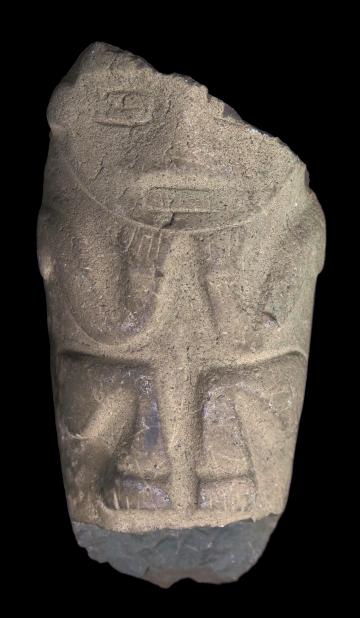
Effigy celt from Betsy Bay, Mayaguana, H: 139mm; W: 70mm; D: 44mm; courtesy National Museum of the American Indian, Smithsonian Institution, Washington (032228.000).
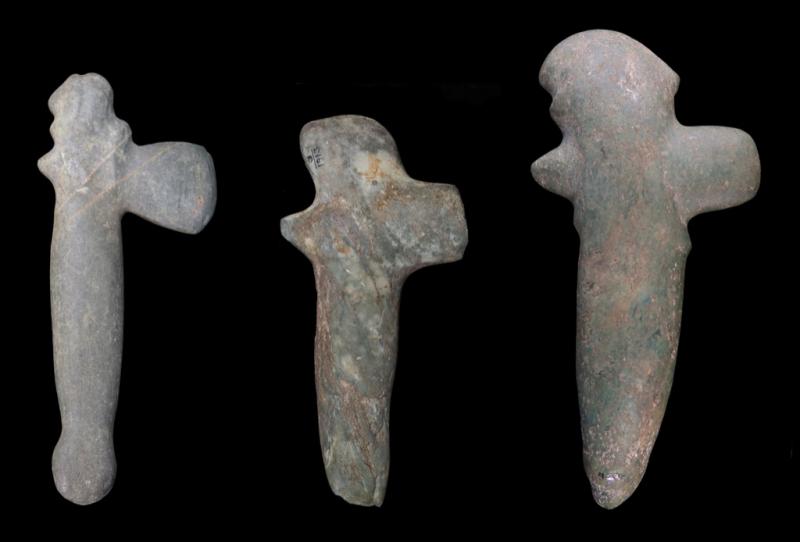
Monolithic axes from Turks and Caicos Islands: Left: monolithic axe, Conch Bar Caves, Middle Caicos, H: 197mm; W: 97mm; D: 23mm; Lady Edith Blake collection; courtesy National Museum of the American Indian, Smithsonian Institution, Washington (059138.000). Centre: monolithic axe, recovered by T. de Booy at Juba Point, Providenciales H: 191mm; W: 91mm; D: 23mm; courtesy National Museum of the American Indian, Smithsonian Institution, Washington (031913.000). Right: monolithic axe, Blue Hills, Providence.
Monolithic axes have both handle and celt carved from a single piece of stone. They would have been ineffectual for carving, and served more as symbolic referents for the fully functioning, composite tools of wood and stone. Their distribution spans Cuba and Hispaniola as well as The Bahamas and TCI. There is a variety of forms – ranging from almost abstract, bulbous carvings, to elegant depictions with great attention to detail, sometimes featuring a zoomorphic carving at the top. Among the earliest documented is a donation of a monolithic axe made to the British Museum in 1830. Examples from the Turks and Caicos are among the few which have a clear provenance: Theodoor de Booy excavated one in 1911/12 from a cave near Juba Point, Providenciales, where it was located beneath roughly 45 cm of ‘cave earth’ (guano), and associated with burned wood and a collection of conch shells. Another, originally part of the collection of Lady Edith Blake (wife of the Henry Blake, Governor of The Bahamas [1884-1887] and Jamaica [1888-1898]), was recovered from Conch Bar, Middle Caicos.
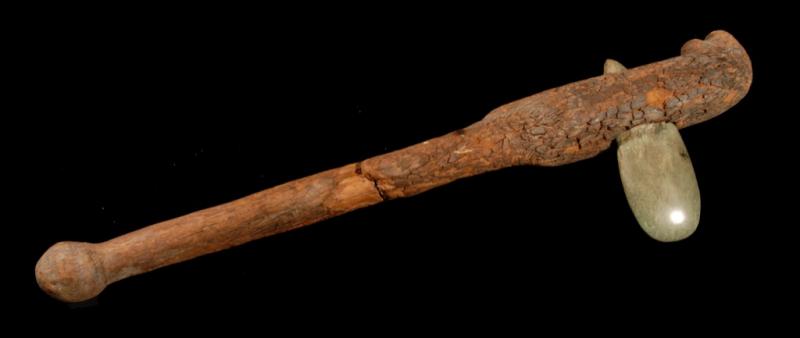
Hafted axe found in a cave on North Caicos, Turks and Caicos Islands. Guaiacum sp., AD 1029-1160. L: 555mm; W: 60mm; Thickness: 55mm. Courtesy National Museum of the American Indian, Smithsonian Institution, Washington (060000.000).
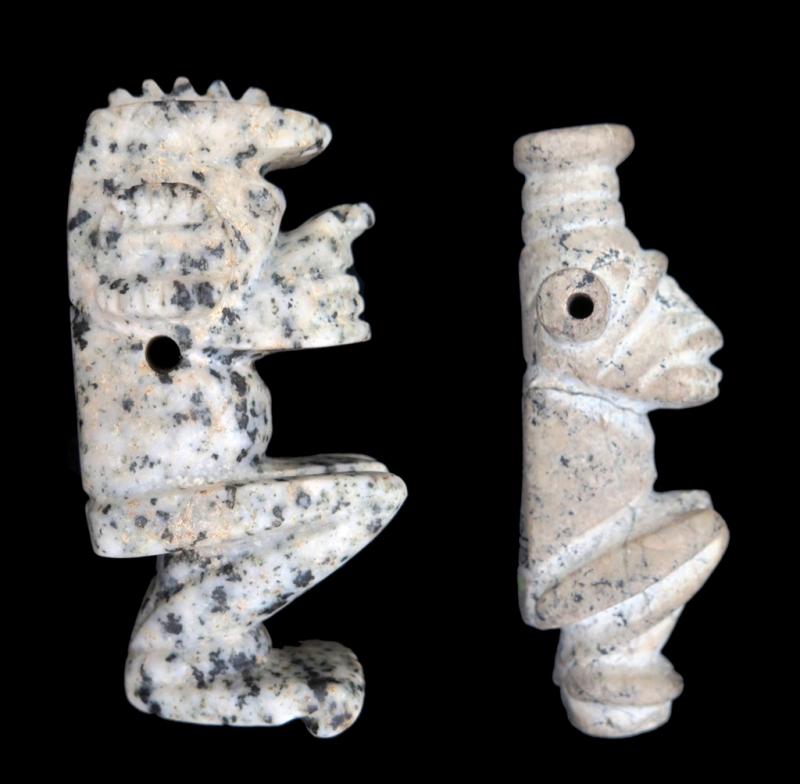
Sculptural pendants. Left: Kew, North Caicos, H: 118mm; D: 56mm; Right: Caicos islands, H: 96mm; D: 32mm. Courtesy, National Museum of the American Indian, Smithsonian Institution, Washington (left: 032200.000; right: 059238.000)
Large anthropomorphic stone pendants and zoomorphic figures have been recovered from The Bahamas/TCI - one of the most elaborate stone examples from the entire Caribbean comes from Kew, North Caicos, first documented by de Booy in 1912 (above left). The striking, arm-less carving, features a jagged headdress, elaborate ear-flares, protruding lower face, and sharply bent knees. It appears to be stylistically unique within the corpus of circum-Caribbean anthropomorphic pendants. Other Caicos examples (above right) have more in keeping with the many bent-kneed figural pendants provenanced to the Dominican Republic.
Other carvings from the Caicos Islands feature zoomorphic imagery, ranging from bird-headed mauls to an unusual, free-standing lizard or iguana sculpture. Turtles, bats and dogs also appear in Bahamian duhos. While some of the iconography clearly has strong parallels to the material culture of the Greater Antilles, there are also stylistically unusual pieces which suggest that raw stone was being imported into The Bahamas/TCI, and finished there – reflecting a uniquely local style.
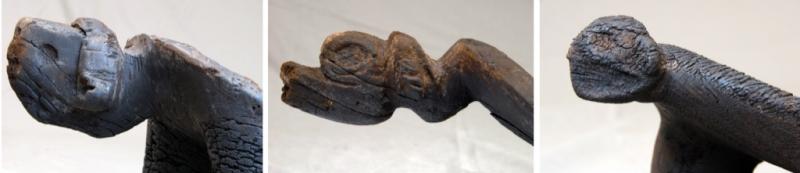
The Cartwright duhos, recovered from a small cave on Long Island. The iconography of each is suggestive of a different animal: left to right – turtle, dog and bat. Catalogue nos. 1988-01-01-3, courtesy, Antiquities, Monuments and Museums Corporation.
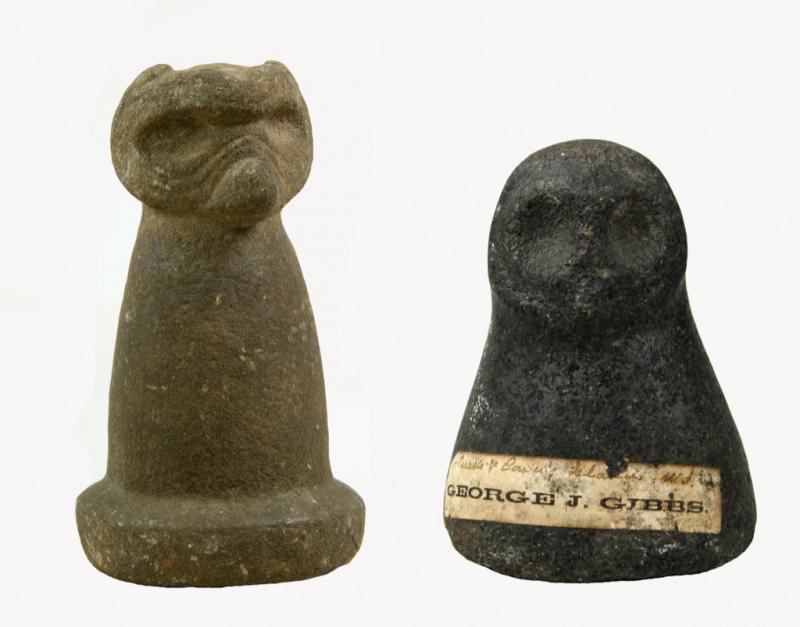
Bird-headed mauls. Left: Bellevue, North Caicos, H: 154mm; W: 89mm; Right: Bambara, Middle Caicos, H: 124mm; W: 89mm. Catalogue no. 25/240 (left) and 25/238 (right), courtesy of the Division of Anthropology, American Museum of Natural History.
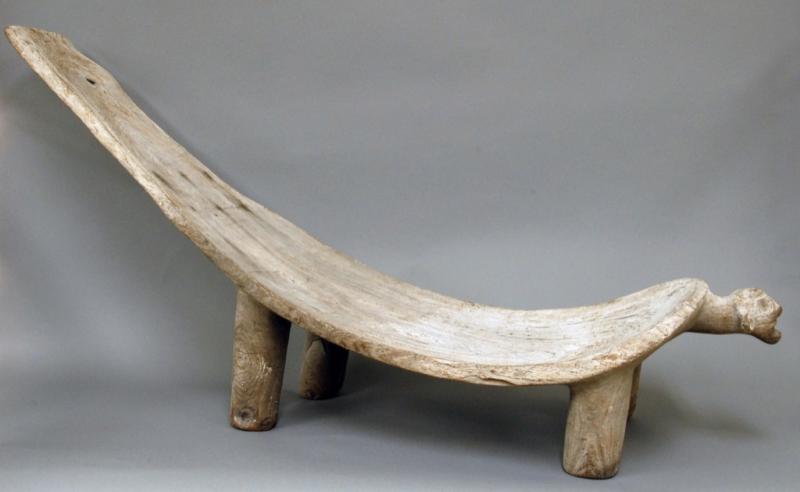
Duho, Caicos Islands (?), TCI. Cordia sp., AD 1440-1620 (95.4%; most likely range within this AD 1440-1522, 79.4%). L: 1105mm; W: 280mm; H: 550mm (max). Courtesy, Turks and Caicos National Museum (Cat no. 2003.30.1).
Pre-Columbian artefacts from The Bahamas and Turks and Caicos have been collected for well over a century, and are dispersed widely in international museum collections – from the British Museum, which houses stone celts from the Turks and Caicos Islands, donated by Capt. Melfort Campbell in 1878 (president of TCI between 1869 and 1873) – to the extensive collections held at the National Museum of Natural History (NMNH) and National Museum of the American Indian (NMAI). The NMAI holds the material excavated by Theodoor de Booy during his expedition to The Bahamas and TCI in 1911, including anthropomorphic celts and rare wood carvings (a paddle from Mores Island and a duho from Acklins). Other early acquisitions include the collection of Grand Turk resident George J Gibbs, acquired by the American Museum of Natural History (AMNH) in 1900. Gibbs had been actively collecting since the 1870s, including a large group of stone celts, anthropo/zoomorphic carvings and a monolithic axe. The Peabody Museum of Natural History holds collections from the F. G. Rainey’s expedition in 1934, with excavated material from Rum Cay, San Salvador and Abaco as well as the Benjamin W. Arnold collection of celts that span the Bahama archipelago. Smaller, but no less important collections have been found in Collegeville, Minnesota and Albuquerque, New Mexico, among others.
The island nations also held early collections – the Victoria Public Library in Cockburn Town, Grand Turk had a display of two duhos, two platters and stone and ceramic artefacts since the late 1890s; these were stolen in the late 1970s, though one duho has now been returned, and is on display at the Turks and Caicos National Museum. In The Bahamas, there was also a display of stone and ceramic artefacts at the Nassau public library, from the 1930s: unfortunately the pieces - including an anthropomorphic celt - have since disappeared. Today, artefact collections, including those from official archaeological site excavations, are in secure museum storage facilities in both nations.
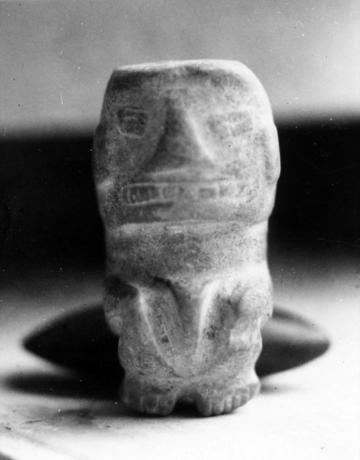
Anthropomorphic celt, displayed in the Nassau Public Library in the 1930s, photo by J. Goggin, courtesy Peabody Museum of Natural History (Rouse archive)
Institutions holding collections from The Bahamas and TCI, and project partners on the SIBA project are:
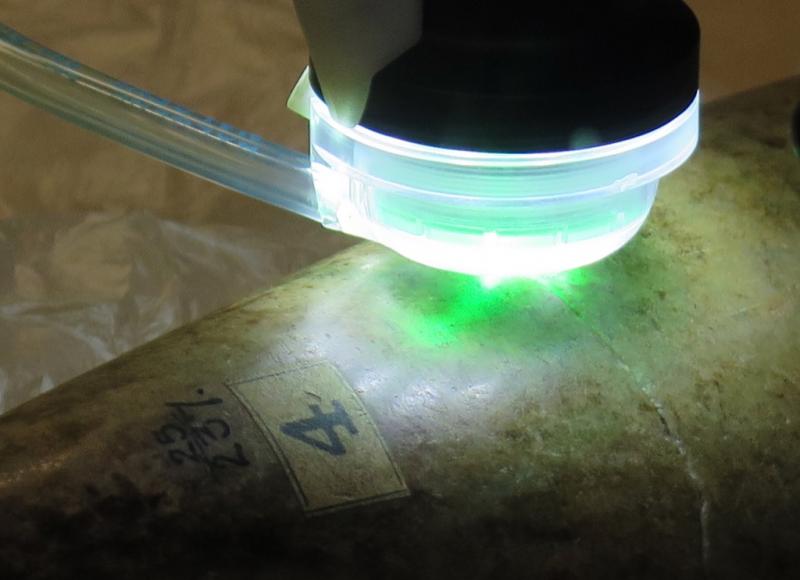
Laser ablating the surface of a celt in the collections of the American Museum of Natural History. Catalogue no. 25/237, courtesy of the Division of Anthropology, American Museum of Natural History.
The project has three complementary strands of analytical investigation: pXRF, laser ablation and EPMA/SEM. Integrating the different analytical approaches provides a comprehensive understanding of the artefact, both in terms of material properties and provenance.
pXRF
The overall methodology includes an initial petrological study of all selected artefacts using a hand lens and then characterisation of a representative part of the artefact using a portable XRF (pXRF). Although only a semi-quantitative method for the light elements such as Mg and Al (significant components of jadeitite), these data are invaluable in assessing if artefacts are made of exotic materials such as nephrite. The data recorded can assist in identifying their composition, though not their source.
Laser ablation
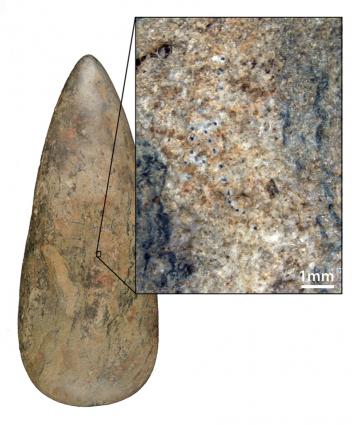
Laser ablation sample site on a 15cm celt from the Bahamas. The detail shows an enlargement of the sample site, with 20 ablation pits, each 100 μm in size - about the width of a human hair. Courtesy Peabody Museum of Natural History, ANT 137371
The innovative approach key to this study is the use of a portable laser ablation system capable of obtaining samples from ~100 µm diameter ablation pits. The ablated material is captured onto Teflon filters and returned to the laboratory in Amsterdam where ultra-low blank Sr-Nd-Pb isotope analyses are performed. The technique is only now possible due to the recent development of mass spectrometry collector technology pioneered by Gareth Davies’ group where application to sub-nanogram sized geology samples has been validated.[1] The macroscopically non-destructive and portable sampling technique is one of the key reasons the museums have supported the study. In situ sampling also enables curators and conservators to be directly involved in sampling strategy.
EPMA/SEM
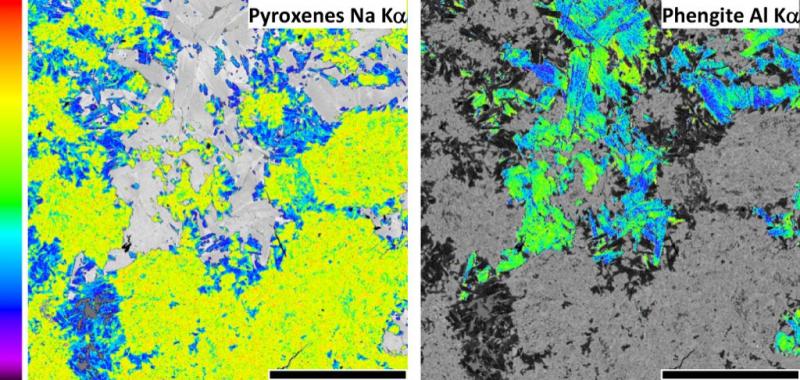
The EPMA/SEM analysis (lead by García-Casco) will be done on fragmentary, duplicate or historically thin-sectioned material. Petrographic/chemical analysis of mineral assemblages in rock-sample thin sections by means of optical and EPMA/SEM (±LA-ICP-MS) allows precise determination of the intrinsic nature of mineral assemblages, their origin and evolution. Even if apparently similar, rock-samples display varied mineral assemblages and textural relations at the micron to mm scale that can be related to specific sequences of crystallization, dissolution and growth. This type of study allows us to decipher the physical-chemical conditions of formation and the origin and evolution of the rock under investigation. This information is key for jade-provenance studies, in particular in the Lucayan communities of The Bahamas, for mineral assemblages and textures of known geological sources of jade in the region, eastern Cuba and northern Dominican Republic, are distinct. These are the more probable sources of Bahamian jade artefacts, though a Guatemalan source and/or unknown geological sources cannot be ruled out. In this regard, petrologic studies may not only help to decipher the networks of pre-Hispanic communities, but may also provide evidence for the existence of hidden sources of jade that remain to be (re-)discovered, an interesting issue for both geologists and archaeologists.
Network analysis
The SIBA project will evaluate interisland connections through The Bahamas and the Greater Antilles using computer-based analysis. Using sea-based least cost approaches, routes through The Bahamas will be generated on a seasonal basis. These least cost routes will be based on modern current and wind information, providing the opportunity to test how canoers may have reacted to seasonal differences or extreme weather occurrences. Modeling the paths of canoe routes will allow for analysis of which areas were easier to reach or more likely a part of regional exchange patterns. The cost to travel between two islands can then be incorporated into a broader network analysis connecting sites and materials in the region. This work can provide an independent baseline for possible interaction and can be compared against known material exchange within the archipelago.
[1] e.g., Koornneef et al. 2015; Klaver et al. 2015; and Knaf et al 2017
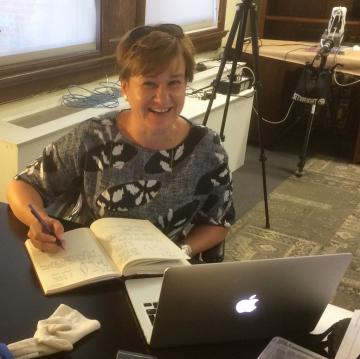
Joanna Ostapkowicz
My interest in Bahamian/TCI pre-colonial material culture goes back to the 1990s, when work towards my PhD enabled a study of a remarkable group of duhos (or ceremonial chairs) from the region. I still consider these exceptional carvings – housed in the collections of the national museums of The Bahamas, Turks and Caicos and the US – to be the pinnacle of duho artistry from the Caribbean region. I returned to Lucayan wood carvings in 2007-2010, when a Getty Foundation grant enabled a detailed study of the material, manufacture techniques and chronology of a large collection of Caribbean wood sculpture. As part of SIBA, my focus has now shifted to inorganic material culture: stone ‘exotics’ that were exchanged and/or brought directly into The Bahamas/TCI archipelago. In my role as PI, I am documenting these collections in detail, ranging from their morphology and iconography to their context and collection histories. Together with colleagues from Vrije Universiteit (Amsterdam), University of Granada and University of Oxford – who bring a wide variety of analytical techniques and expertise to the project – we aim to more concretely define the material culture of the region, and the networks that linked it to the wider circum-Caribbean.
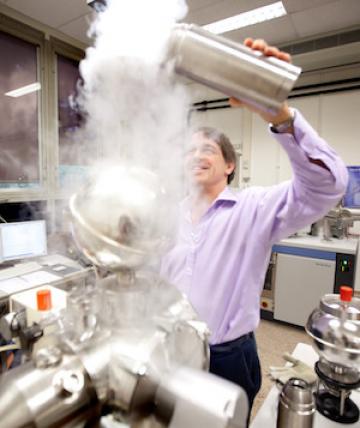
Gareth Davies
Co-I Gareth R Davies leads the petrology and geochemistry research aspects of SIBA from the Vrije Universiteit, Amsterdam (VUA) where he has built up a geochemical and isotope provenance group over the last decade. The VUA team has developed a series of state-of-the-art techniques in collaboration with industry (Thermo Fisher) and university partners (ETH Zurich) to produce a portable laser ablation sampling instrument and the ultra-sensitive mass spectrometry techniques that allow the analysis of small samples. These developments now allow sampling of artefacts without producing visual damage. The VU team has also been developing new techniques for application to provenance questions in forensic science with the ultimate aim of applying validated techniques to archaeology and food safety studies.
The VU team has been working on Caribbean archaeology together with colleagues at the University of Leiden over the last decade. Together they have made major progress in understanding human migration prior to colonialization and the impact following the arrival of Columbus (https://www.universiteitleiden.nl/nexus1492). Most recently integration of geological and geochemistry with machine learning techniques has been used to pioneer improved methods to interpret regional isotope data (isoscapes). Our role in SIBA is part of the drive to apply provenance techniques to the circulation of lithic artefacts and hence produce a better understanding of the significance of the material culture of individual artefacts and their role in local and regional networks.
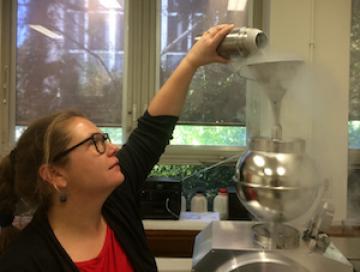
Alice Carolin Susanne Knaf
I’m a PhD researcher at the Geology and Geochemistry Department at the Vrije Universiteit (VU) Amsterdam.Within the AHRC funded SIBA project my research focuses on the provenance of precolonial Bahamian jadeite and omphacite jade artefacts, like celts and adornments. Lithic studies can provide information ranging from collecting and processing the raw material into finished products, to pre-colonial artefact distribution and trade. The project involves research trips to museums in the United States and the Caribbean. The aim is to examine and sample Bahamian lithic collections with the use of a prototype portable laser ablation sampling device designed to sample museum artefacts in a macroscopically non-invasive way. The laser ablation device leaves ablation pits of about 100 μm in width and depth (the thickness of one human hair). The ablation process creates small aerosols which are transported by an ambient air stream via a tubing connection onto a clean and inert filter. Filters are returned back to the VU Amsterdam for further trace elemental and multi-isotopic (Sr-Nd) analysis. This cutting-edge provenancing technique enables us to link the geochemical fingerprint of lithic artefacts to Caribbean source rocks.
See a recent presentation on the project at the 25th (2019) Annual Meeting of the European Association of Archaeologists, Bern, Switzerland.
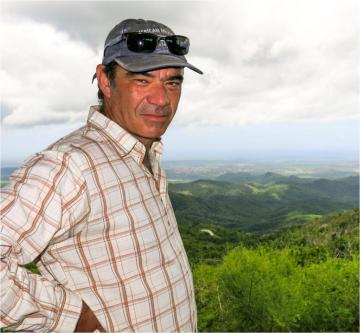
Antonio García Casco
My scientific profile is dominated by metamorphic petrology. I have a sound knowledge of the petrological composition of the Greater Antilles, northern South America and Central America, where I have developed much of my research. I have also been involved in the study of archaeological lithics in the Caribbean for some time, including collaboration with archaeologists and petrologists of Puerto Rico, Cuba, Dominican Republic, The Bahamas, Colombia, Panamá and Costa Rica, as well as George Harlow (American Museum of Natural History) and the Leiden researchers led by Corinne Hofman. Though focussed on jade, I have studied/discovered other lithics including, for example, variscite (first description in Colombia, Venezuelan source) and glauconite (first description in Panamá, local source). My involvement with SIBA provides an opportunity to carry forward these established interests through the study of artefacts now in museum collections, with the aim of enhancing information about Bahamian indigenous exchange networks.
John Pouncett
I am the Spatial Technology Officer for the School of Archaeology at the University of Oxford and have a long-standing interest in GIS, spatial analysis and landscape archaeology. My involvement in the Stone interchanges in the Bahama archipelago project builds on recent work on the spatial modelling of isotope data I have carried out as part of research projects on the Caribbean (Pitch Lake, Trinidad and The Bahamas/Turks and Caicos Islands) and beyond (Northern Ireland and prehistoric Britain). I will be using spatial approaches to assignment to determine the most likely sources of the raw materials used in the manufacture of Lucayan stone artefacts.
Emma Slayton
While working on my PhD dissertation at the University of Leiden, I applied least cost pathway analysis techniques to the study of pre-Columbian canoeing through the islands of the Lesser Antilles in the Caribbean Sea. By generating least cost canoe routes, I evaluated relationships between archaeological site assemblages based on the exchange of materials or the presence of specific cultural stylistic elements. For the SIBA project, I will be applying this technique to hypothesize the structure of canoe routes between islands in and around The Bahamas, a topic I explored briefly in 2013 with Joanna Ostapkowicz and John Pouncett. Based on the time cost of paddling, the results will be used to suggest the process of settling The Bahamas, the layout of maintaining connections between islands, and which island communities were in contact with one another. Simultaneously, the trajectories of the canoe routes can indicate any areas of easy access and suggest prominent waypoints or entrance zones for Amerindians traveling through The Bahamas.
Juan Cárdenas Párraga
I have been involved in jadeitite and associated rocks research since my MSc and PhD studies, mostly Sierra del Convento mélange (Eastern of Cuba). I have approached topics such as the origin and evolution of this rock assemblage using electron microscopy, geochemistry and geochronology and have established the petrological and tectonic evolution of this mélange. I have specific interest in the P-T-t path and fluid-rock interactions and metasomatism involved in the formation and evolution of jadeitite rock, and metamorphism of associated rocks in subduction mélanges. My goal in the SIBA project is focused on the application of metamorphic petrology tools to discriminate possible sources of extraction of archaeological artifacts in the Caribbean context.
José Antonio Lozano
My doctoral thesis (2018) was about eclogitic ophiolitic rock of the Betic Cordilleras and their use for polished tools that circulated on the Iberian Peninsula during prehistoric times, for which I offered the first evidence. My scientific profile is therefore dominated by petrology and geochemistry with special interest in geo-archaeological investigation. Among other activities, I have examined a collection of archaeological rock crystal artefacts recently found at Valencina de la Concepcion (Seville, Spain), one of the largest 3rd millenium BC sites in Western Europe, with the most technically sophisticated and aesthetically impressive collection of rock crystal material ever found in Prehistoric Iberia. I have also worked in geo-archaeological characterisation and provenance of metaliths, the petrological characterisation of an epigraphic stela (the earliest monumental script in Ibera) and the circulation of archaeological pieces of flint from the Recent Prehistory in the Iberian Peninsula, where I determined for the first time the origin of prase quartz as well as archaeological pieces made of fibrolite, marble, ophite, amphibolite and actinolitite. My participation in the SIBA project will contribute to buuilding geoarchaeological information about exotic jade materials in The Bahamas.