
Staff spotlight: Professor Manuel Fernández-Götz

On site at Ambleside in the Lake District where Manuel conducted two fieldwork campaigns
Professor Manuel Fernández-Götz is the School’s Professor of Later European Prehistory, from the Bronze Age to the Roman conquest. His research interests span across big topics and questions about social identities, urbanisation, Eurasian connectivity, migrations, encounters and conflict.
Manuel teaches on both our undergraduate and taught masters. He is the Course Director of the MSc Archaeology and coordinates the module titled “The Celtic World: Archaeology of Iron Age Europe”.
Q.1. As someone interested in identity and movement of people, I’m interested to know a bit more about how you view your own identity. With both a Spanish and German surname, and a work life of academic migration across Europe with posts in Spain, Germany, Scotland and England - how do you describe your personal identity and where do you feel the strongest sense of belonging?
That is a tricky question! My mother is German and my father Spanish, and I have lived in both countries. Since childhood people always asked me which nationality I identified more with, to which I tended to reply “European”. Growing up, when I was in Spain I tended to feel more German and when I was in Germany more Spanish. I think that happens to many binational people, and it says a lot about how identity is relational and context-dependent. I think that my mixed background explains why I have always been fascinated by questions of identity, and it is probably also why some of my earliest publications were focused on ethnicity and how archaeologists have approached the topic. There are many places to which I feel a strong connection (e.g. Madrid, parts of southern Germany, the Scottish Borders), but they are not necessarily my “home” since I have relocated so often during my life, particularly during my PhD when I also spent quite a bit of time in France and the Netherlands. I think that also contributes to my interest in migrations, especially the integration of migrants into new environments. As I once heard, “home is where your books are”, and I think that definition works fairly well for me.
Q.2. You teach a course on Celtic archaeology. Is the debate around the term ‘Celt/Celtic’ still worth having in archaeology?
I think it is still fine to use the term, but it all depends on how we do it and what we mean by it. It can be particularly useful in order to engage with larger public audiences, for example when it comes to organising museum exhibitions, in a similar way to how people use terms such as “Scythian”, “Anglo-Saxon”, or “Viking”. In my case, I see “Celtic” as a sort of “umbrella” term to designate a wide range of populations that in antiquity were named as such by classical authors and/or for which we have evidence that they spoke a language classified as ‘Celtic’. But this does not mean that all the peoples encompassed under the term necessarily identified as such, some might not even have been aware of it. While there were some commonalities, there was also considerable diversity among the communities designated as ‘Celtic’, and there was no such thing as a homogeneous Celtic society or religion. In most cases, people’s sense of identity would have been primarily linked to their respective family, clan, and tribal group. For example, in Gaul alone we know of the existence of around 60 different tribal entities at the time of Julius Caesar’s military conquest, with groups such as the Helvetii, Arverni, Aedui, or Treveri. Each of them was in turn subdivided into various smaller groups, and something similar can be observed in other parts of Iron Age Europe. For me, the most interesting aspect is to explore these multiple, nested levels of identity.
Q.3. What does ‘power from below’ mean?
It is a term that I used with my US colleague T.L. Thurston for an edited volume that we published in 2021. The aim was to question traditional narratives of complexity as inextricably linked to top-down power structures, showing instead how throughout history commoners have developed strategies to sustain non-hierarchical networks and contest the rise of inequalities. With ‘power from below’ we wanted to describe social systems and modes of organisation in which power is strongly based on participatory governance and mechanisms for building social consensus. An example are the public assemblies that existed in much of Late Iron Age and medieval Europe, for example the Scandinavian Things, which were mass-gatherings at which people came together to take political decisions and usually also participate in other associated activities such as religious celebrations and fairs. This does not mean that all participants had the same political influence, since inequalities certainly existed and some of the groups even had kings, but it represents a very different model from the triangular, top-down social interpretations that have often dominated archaeological discourses.

Cerro del Gollino
Q.4. You conduct fieldwork in Spain. Tell us about the site.
I am currently digging with Spanish collaborators from Madrid at a site called Cerro del Gollino. It is a large Late Iron Age fortified settlement (oppidum) in central Spain, which was occupied between the late 3rd and the 1st centuries BCE. This is a crucial period in the history of the region since it saw the development of the first towns and also the incorporation into the Roman world. This links with two of my main areas of research: early urbanism and conflict archaeology, as the site seems to have been abandoned as a result of an armed conflict in the 1st century BCE. In the past, I have also conducted fieldwork in other parts of Spain where similar issues were addressed, for example at the oppidum of Monte Bernorio, which was attacked and destroyed by the Roman legions during the Cantabrian and Asturian Wars launched by Emperor Augustus. In addition to this research on Late Iron Age oppida, I have also carried out fieldwork at various sites in the UK, Germany, and Croatia, exploring from the Bronze Age to the Roman period.
Q.5. What is the best thing you’ve found on an excavation?
During my first year excavating at the Heuneburg site in southern Germany, in 2005, we found the remains of a monumental gatehouse that constituted the main entrance to the lower town of the settlement. It was at least 16 m long and 10 m wide, with a base of stone and an upper construction of mudbricks. The Heuneburg is one of the best investigated Iron Age sites, one of the earliest towns in temperate Europe, and probably my favourite archaeological site in the world. I have a long-standing connection with the place, since I excavated there for several years when I was still a student, and later I became coordinator of the project immediately after finishing my PhD and before my move to Edinburgh.
Q.6. If you could go back in time, when and where would you visit?
There are so many places and times that I would like to visit! Not only connected with my own areas of research, but also more widely, just out of curiosity and fascination for the otherness of the past. To name just a few, the Upper Palaeolithic while they were doing the cave paintings, the city of Timbuktu in the Middle Ages, or North America before the arrival of Europeans. When I was a kid growing up in southern Spain I was fascinated by medieval Granada, the last Muslim kingdom on the Iberian Peninsula. But if I would have to choose one place to go back in time it would be either Gaul on the eve of the Roman conquest or Iron Age Britain. I would like to know more not only about what people did, but also what they thought and felt, as I am sure that their understanding and perception of the world were very different from our modern one.
Q.7. What’s the subject or topic you want to study but don’t have time to currently fit into your schedule?
I would definitely like to be able to read much more broadly about archaeological theory and also about approaches to topics such as urbanism in other parts of the world. Thankfully, I recently became the co-editor of the Journal of Urban Archaeology, so that should provide me with a good opportunity for reading more about research in areas outside my direct expertise. And at some point in my career I would also like to write at least one book about the human past for a much wider audience. I already have a provisional title for it, but I will keep it to myself for now since it is probably going to take quite a few years before I can dedicate proper time to it.
Q.8. Why do you think that the Romans did not manage to conquer Scotland?
This is a question that I often asked my students when I was teaching in Edinburgh, and a frequent response was “because it was too cold for them”. As somebody who spent most of his childhood in Spain I can relate to that, but obviously from an academic perspective we need to look at more complex reasons. Traditionally it has often been interpreted as just not being interesting enough for the Romans, but I think that the actual story is much more complex and includes a combination of short-term events and more structural factors. For example, it is true that the Romans sometimes withdrew troops from Scotland because they were needed elsewhere in the Empire, but looking at it from a long-term perspective a crucial factor was the type of local societies that they encountered. Iron Age communities in Scotland were more decentralised and heterarchical than societies in many areas of the continent, and the lack of a pre-existing urban network made it very difficult for the Romans to establish permanent control over the region in the long-term. They could defeat the indigenous groups in an open battle, as occurred at Mons Graupius, but winning a battle and controlling the land and its people are very different things. Perhaps some more recent empires could also have learned some lessons about it…
Q.9. What advice or ‘top tips’ would you give to a student researcher about to take their viva voce?
Firstly, that they are the real experts on their topic, having spent several years researching it in detail. Of course, the examiners will be experienced scholars with a wide knowledge, but for the actual DPhil topic the student is the main expert. Secondly, that they should try to enjoy the experience of the Viva; I know this might sound difficult when you are awaiting it, but once it gets started this is actually the case for many candidates, including myself when I had my own PhD defence. It is an opportunity to speak in detail about your topic with experts that have taken the time to engage with it. Moreover, it is also a wonderful opportunity to obtain constructive feedback, which can be very useful for example when preparing publications derived from the DPhil research. Some level of anxiety is unfortunately inevitable and forms part of the rite of passage of obtaining the doctoral degree, but there are many reasons to feel confident. Finally, the DPhil supervisor(s) and other senior colleagues can also provide useful guidance in advance, so I would definitely encourage students to discuss the actual Viva process with them.
Q.10. If you were a guest on Desert Island Discs, what luxury item would you take with you to the Island? (In accordance with the DID rules you can’t use it to escape or communicate).
Not really a luxury item, but to go with an Oxford-related theme I think I would select the Lord of the Rings trilogy. I have always been a big Tolkien fan and the over 1,000 pages would keep me entertained for a while!
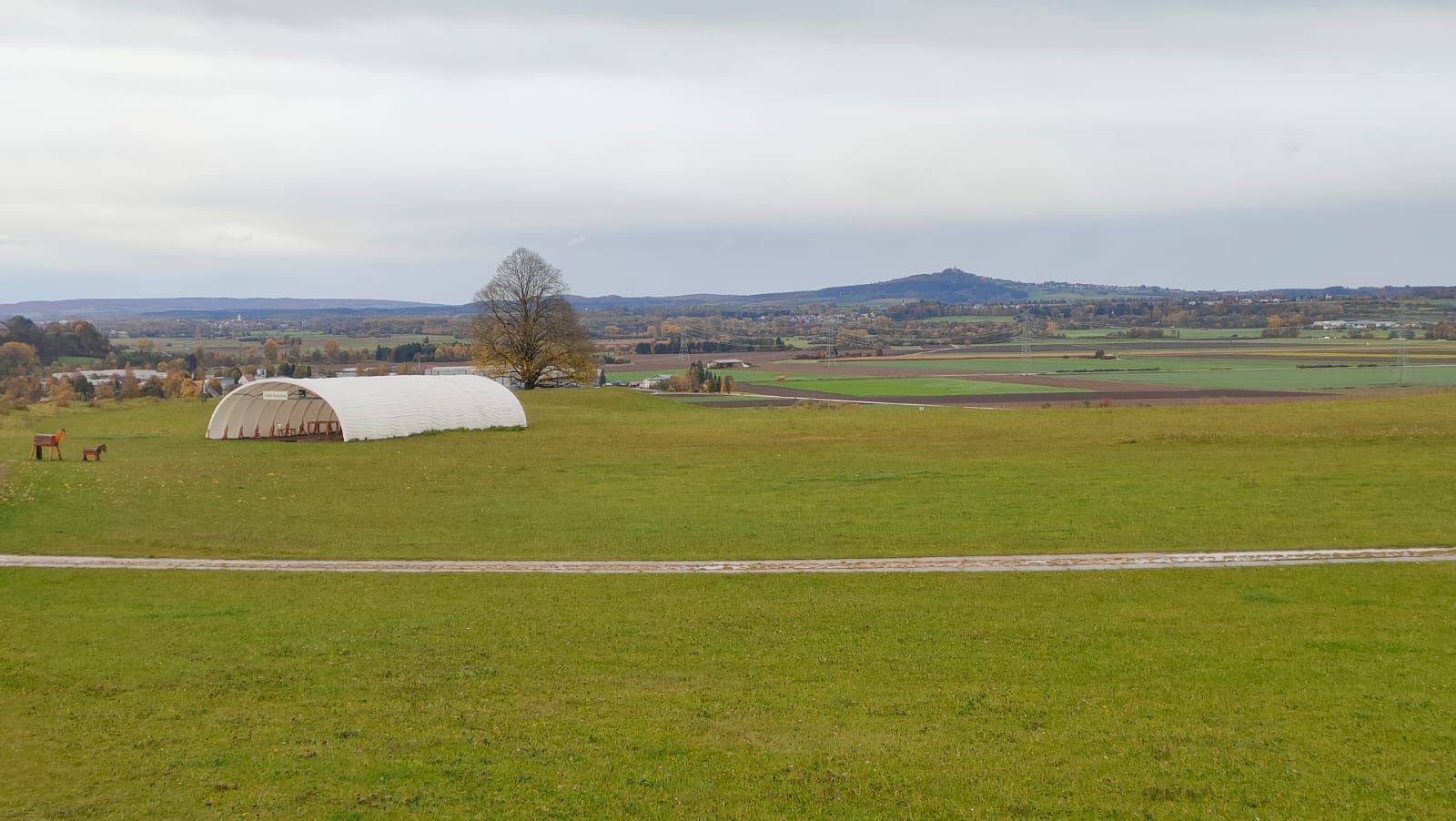
Landscape photo of the archaeological site at Heuneburg, southern Germany

